


Direct burial and overhead installation are two primary methods for laying insulated pipelines; the structural differences lie mainly in the design of the outer protective layer and the insulation layer.
Direct-burial insulated pipes utilize a high-density polyethylene (HDPE) outer protective layer. This HDPE casing offers excellent waterproofing, resistance to soil corrosion, and sufficient compressive strength to withstand the pressure from backfill soil and surface loads. The polyurethane foam insulation layer is injected and molded in the factory, forming an integrated "three-in-one" structure with the steel pipe and the outer casing; this high level of structural integrity makes it suitable for direct underground burial.
Overhead insulated pipes differ significantly. Since the pipe is suspended in the air, the outer protective layer is exposed to the atmosphere and must withstand sunlight, rain, and temperature fluctuations. Consequently, overhead pipes typically use galvanized steel or aluminum sheets for the outer casing instead of polyethylene. While metal casings offer strong UV resistance and durability against aging, they have high thermal conductivity, necessitating measures to prevent thermal bridging. However, the outer layer does not require additional anti-corrosion treatment.
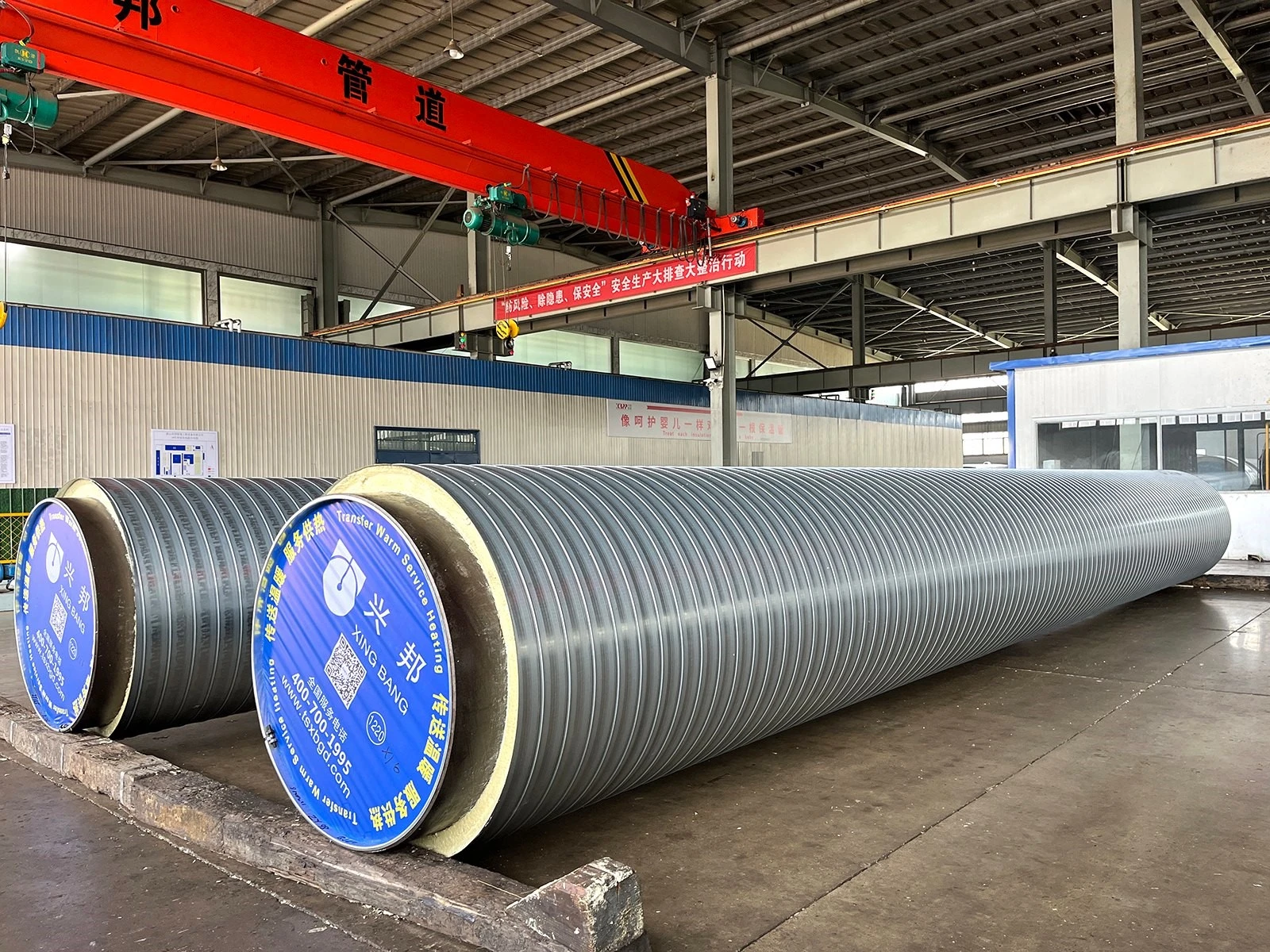
There are also differences in the design of the insulation layer. For direct-burial pipes, a single layer of polyurethane foam suffices. In contrast, overhead pipes-particularly those transporting steam-often employ a composite insulation structure: an inner layer of high-temperature-resistant material (such as calcium silicate segments or high-temperature glass wool) combined with an outer layer of polyurethane foam. This is because overhead pipes face poorer heat retention conditions than buried pipes; ambient airflow dissipates heat, requiring thicker insulation or a multi-layer composite design to achieve the same thermal performance.
Additionally, overhead pipes must address the issue of condensate. During operation, if gaps exist in the insulation or if local temperatures drop below the dew point, condensation may form. Drain valves must be installed at appropriate intervals along overhead pipes to prevent condensate from accumulating at low points. Buried pipes, however, are situated in soil with relatively stable temperatures, making condensation less of a concern.
Neither structure is inherently superior; they are simply suited to different scenarios. Direct-burial pipes are ideal for municipal networks with ample underground space, whereas overhead pipes are better suited for areas with congested underground utilities or complex geological conditions. The choice depends on specific site conditions.