


When can the insulation pipe be backfilled after installation? It is not as simple as "fill it in after welding". If you choose the wrong time to backfill, the previous welding, flaw detection, and repair work may be in vain.
The work that must be completed before backfilling includes: steel pipe welding, non-destructive testing of welds, hydraulic pressure testing, joint insulation patching, and patching air tightness testing. These processes have a strict sequence - welding and flaw detection must be completed first, and then the hydraulic test is carried out. Only after passing the test can the joint insulation be done. If the insulation is done first and then the pressure is tested, once there is leakage in the weld, the insulation layer will have to be removed and redone.
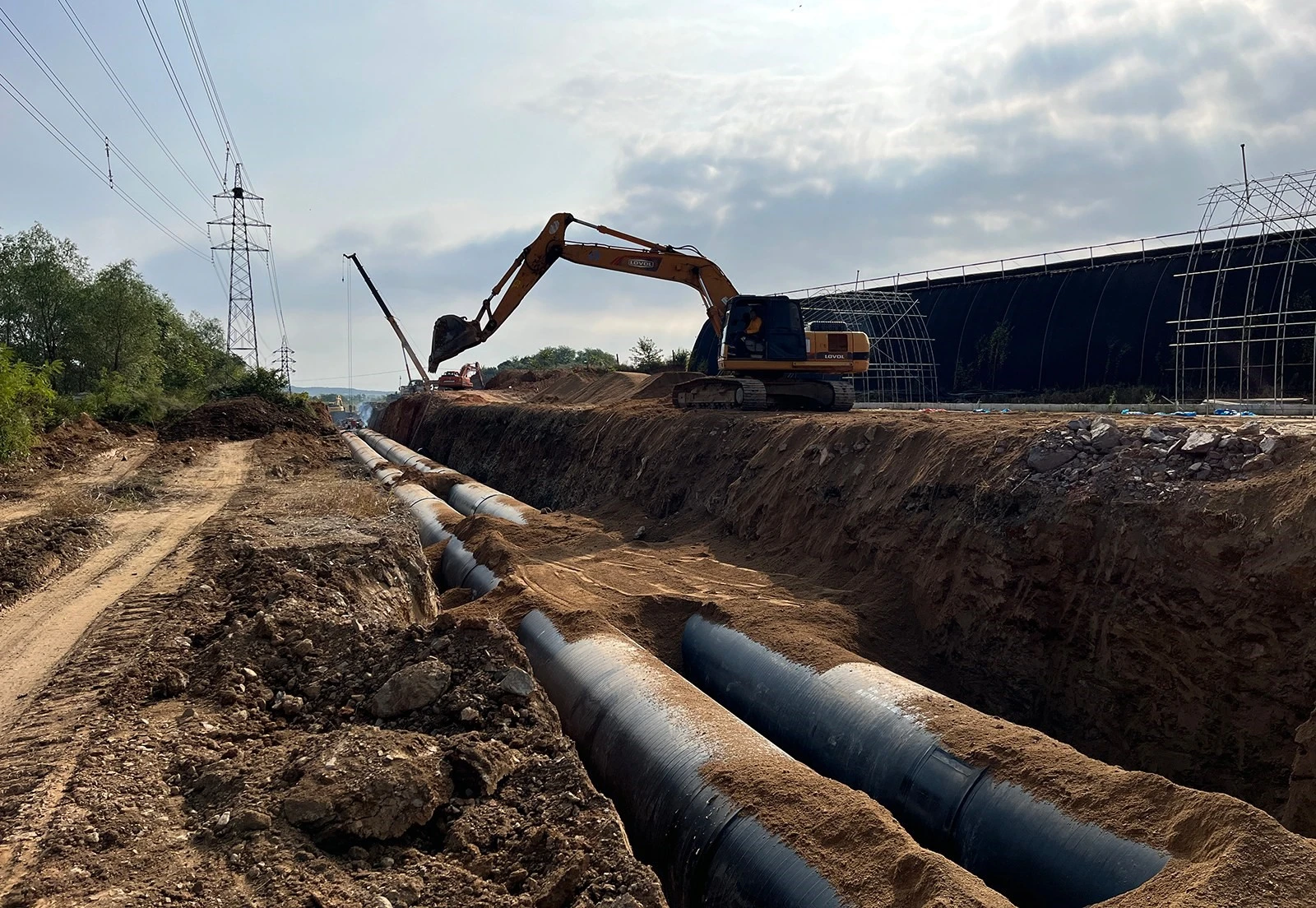
Hydrostatic testing has the greatest impact on backfill timing. The strength test pressure is 1.5 times the design pressure. If there is no leakage or deformation after 10 minutes of stable pressure, it is qualified. The pipeline is exposed during the pressure test, making it easy to observe whether there are leaks in the welds and pipe body. If backfilled in advance, the leakage point will not be visible. After the pressure test is passed, the accumulated water must be drained from the lowest point of the drain valve.
After the joint insulation patching is completed, an airtightness test needs to be done. Drill holes in the outer protective pipe of the joint, fill them with 0.02 MPa air or nitrogen, and use soapy water to check for bubbles. Only after passing this test can the backfill be carried out.
Backfilling itself is also particular. The 300mm range from the bottom to the top of the pipe should be backfilled with fine sand or screened soil with a particle size less than 10mm, and manually compacted in layers, with each layer not exceeding 200mm thick. Backfill from both sides of the pipe symmetrically and simultaneously, and the height difference between backfills on one side shall not exceed 200mm. Mechanical backfilling can only be used when the top of the pipe is above 300mm. Fine soil or sand should be used within 500mm of the top of the pipe. It is not appropriate to backfill too early or too late - if it is too early, the inspections that should be done are not completed, and if it is too late, the pipe may be damaged if it is exposed for a long time.