


High Temperature Steam Piping

High temperature steam piping is the pipeline system that carries steam at elevated temperature from a heat source or process plant to the point of use. Its task is simple to state and demanding to achieve: deliver steam at the required temperature and pressure while limiting heat loss, preventing condensation, and keeping the outer surface safe for the people and equipment around it.
The systems described here are designed for steam media up to 350 °C and nominal pressure up to PN25, in three installation forms — directly buried, overhead and utility tunnel. Because networks differ widely in temperature, pressure, route and installation method, this page sets out what the system does, how it is built, which types and fittings are available, and what to consider when specifying it.
What functions does it have?
Transports steam over distance
from boiler houses, CHP plants or process units to the users that need it.
Holds the temperature
insulation limits heat loss along the route, so steam arrives at the design temperature and pressure.
Handles condensate
drainage, steam traps and venting keep condensate and air out of the line, protecting heat transfer and the pipe itself.
Protects people and assets
the outer surface stays at a safe temperature, and the pipe is shielded from soil, water and mechanical damage.
Fits the route
the same system serves buried networks, overhead racks and utility tunnels.
Keeps the network serviceable
correct design and maintenance allow decades of operation with minimal intervention.
Why High Temperature Steam Piping Matters
Energy efficiency
heat lost through the pipe wall is fuel paid for and never used; effective insulation keeps that energy in the network.
Process reliability
stable steam temperature and pressure are prerequisites for production quality in many industries.
Safety
uninsulated or poorly insulated steam lines are a burn hazard and a source of condensation-related problems.
Service life
protected insulation and a sealed outer layer prevent corrosion and preserve performance over the long term.
Lower operating cost
reduced heat loss, fewer repairs and less downtime across the life of the network.
Monitoring ready
leak detection can be integrated during manufacture, so faults are found early.
How High Temperature Steam Piping Is Built
Three standard constructions cover most steam networks. All of them use a steel working pipe, a composite insulation system and a sealed outer layer; they differ in how the insulation is arranged and how thermal movement is absorbed.

Directly buried — internal sliding
Working pipe → anti-corrosion coating → drag-reduction layer → heat-insulation layer → stainless steel fastening bands → reflective layer → polyurethane insulation layer → outer casing steel pipe → external anti-corrosion coating.

Directly buried — external sliding
Working pipe → anti-corrosion coating → insulation material → stainless steel fastening bands → reflective layer → air layer → sliding / guide supports → outer casing steel pipe → external anti-corrosion coating.

Overhead and utility tunnel
Working pipe → anti-corrosion coating → drag-reduction layer → heat-insulation layer → stainless steel fastening bands → aluminium-foil reflective layer → polyurethane insulation layer → spiral steel outer protective layer, available in colour-coated steel, hot-dip galvanised steel, stainless steel or aluminium sheet.
In this composite arrangement the heat-insulation layer sits against the working pipe and brings the temperature down to the range the polyurethane layer can accept, so each material works within its own limit. For utility tunnels a B1 flame-retardant polyurethane grade can be specified to reduce fire risk during installation and later operation; sliding supports can also be supplied with external insulated pads to cut heat loss at the supports. Cladding sheet thickness is selected by casing diameter — typically 0.5–1.2 mm for colour-coated, galvanised or aluminium sheet and 0.4–1.0 mm for stainless steel, increasing with size.
Types and How to Choose
By installation form
· Directly buried — the most common choice for urban and park networks; the outer casing and coating are designed for soil and groundwater conditions.
· Overhead — used on pipe racks where the route is above ground; weather-resistant cladding and supports are specified.
· Utility tunnel — installed in comprehensive pipe galleries, where inspection is easy and flame-retardant insulation grades are available.
By structure
· Internal sliding — the working pipe moves inside the insulation, which stays fixed to the outer casing. Suited to smaller diameters, shorter runs and moderate temperatures.
· External sliding — insulation and outer casing move together over the working pipe, with an air layer that also improves insulation. Preferred for larger diameters, higher temperatures and long trunk lines.
|
Aspect |
Internal sliding |
External sliding |
|
Movement |
Working pipe slides inside the insulation |
Insulation and outer casing slide over the working pipe |
|
Thermal performance |
Suitable for moderate temperatures |
Better heat retention thanks to the air layer |
|
Typical diameter |
Smaller branch lines |
Large-diameter main lines |
|
Typical application |
Short connections and medium-temperature networks |
High-temperature trunk lines and long routes |
products


Pipe Fittings and Accessories
A steam line performs only as well as its fittings. We supply factory-insulated fittings manufactured to the same standard as the pipe, so the insulation is continuous and the field work is reduced to welding and joint finishing:
Reducers
insulated reducers for diameter changes along the route.
01
Tees
insulated branch connections for main-to-branch junctions.
02
Bends
standard insulated bends, plus bends with one-stage and two-stage compensation for absorbing thermal movement at direction changes.
03
Steam traps
prefabricated insulated steam trap assemblies for condensate removal.
04
Internal fixed supports
prefabricated supports that anchor the line and transfer thrust into the structure.
05
Standards We Manufacture To
CJ/T 246-2018 — Prefabricated directly buried steam insulation pipes and pipeline accessories for urban heating
CJJ/T 104-2014 — Technical specification for directly buried steam pipelines in urban heating
T/CDHA 2-2019 — Prefabricated steam insulation pipes and fittings for overhead and comprehensive pipe galleries
Key Technical Parameters
|
Parameter |
Value / range |
|
Medium temperature |
Up to 350 °C |
|
Nominal pressure |
Up to PN25 (2.5 MPa) |
|
Installation forms |
Directly buried, overhead, utility tunnel |
|
Production range |
DN25 – DN1000 |
|
Working pipe (specification sheets) |
OD 57–820 mm, wall thickness 3.5–10 mm |
|
Outer casing pipe |
OD 219–1320 mm, wall thickness 6–12 mm |
|
Insulation layer thickness |
60–223 mm, by size |
|
Air layer thickness (external sliding) |
11–16.5 mm |
|
Insulation system |
Heat-insulation layer (microporous calcium silicate / aluminium silicate) + polyurethane foam |
|
Outer protective layer |
Spiral steel pipe; colour-coated, hot-dip galvanised, stainless steel or aluminium sheet for overhead and tunnel |
|
Steam piping capacity |
100 km+ per year |
Sizes and layer thicknesses are confirmed against the project specification and the applicable specification sheet before quotation.
Applications
District heating networks — steam and high-temperature hot water distribution from plant to city.
Industrial parks — central steam supply shared by multiple factories and process users.
Utility tunnels — steam mains routed through comprehensive pipe galleries.
Refineries and petrochemical plants — process steam at elevated temperature and pressure.
Power generation — auxiliary steam lines and internal heat distribution.
Food and pharmaceutical processing — clean, temperature-stable process steam.
Oilfield steam injection — insulated surface lines feeding injection wells.
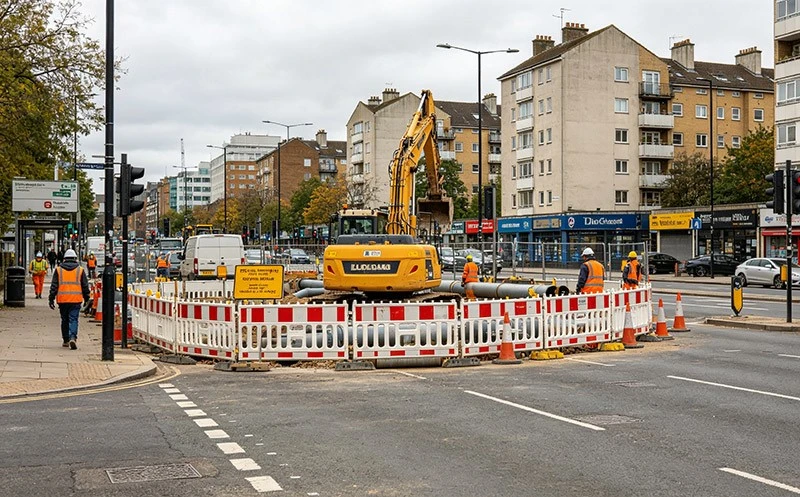


Project Case
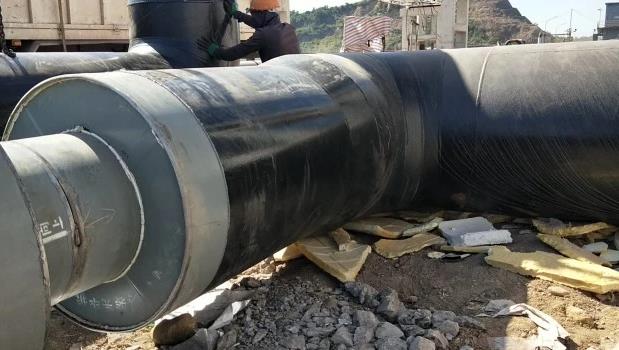
Tianhong Industrial Park · Haihe Functional Supporting Area, Vietnam
The project required medium- and low-pressure high temperature steam piping in DN200–500 for the park's functional supporting area. We supplied 2,000 m engineered for the local soil and groundwater conditions, with matching fittings, joint materials and installation guidance. The line was delivered on schedule and remains in continuous service, providing stable steam supply to the park's industrial tenants.
Ulaanbaatar Food Industrial Park Heating Project (Mongolia)
Located in the Food Industrial Park of Ulaanbaatar, the capital of Mongolia, this project supplied elevated steam insulated piping for the park's heating system. Ulaanbaatar experiences extreme winter temperatures as low as -40°C, placing rigorous demands on pipeline insulation performance and operational reliability. Xingbang Pipeline developed a specialized design tailored to these frigid conditions to ensure long-term, stable operation, further strengthening its brand influence in the Central Asian market.

Quality Assurance and Service
Standards participation — we take part in the preparation of the industry standards that govern insulated pipe production.
Two manufacturing bases — production in Tangshan, Hebei Province and Jingzhou, Hubei Province, with dedicated site teams that stay with each project through installation and commissioning.
Material and process control — premium raw materials and in-process inspection at every stage, under an ISO 9001-certified quality system with CNAS-accredited laboratory testing.
Documentation — material certificates, inspection and test reports, and third-party inspection (SGS / BV / TUV) where required.
Value-added services — pipeline leakage monitoring, insulation joint supply, and technical training for installation and maintenance teams.
About Xingbang
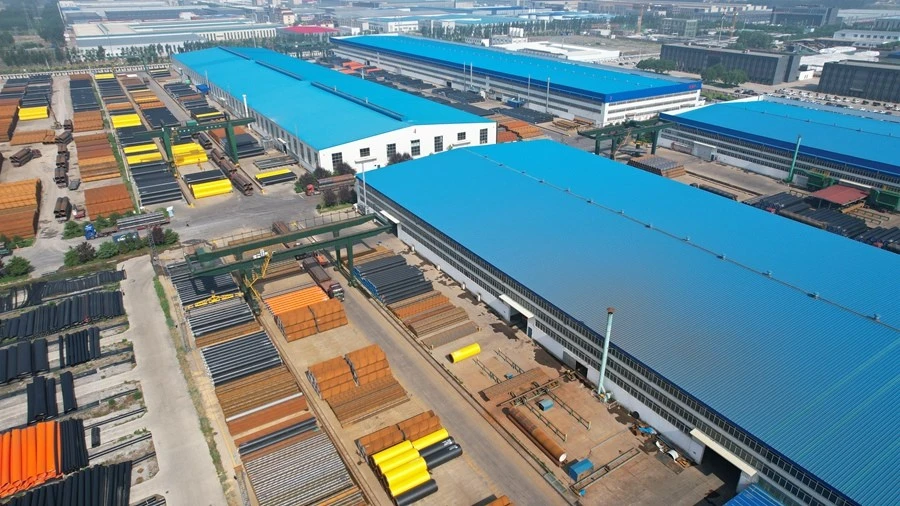
Founded in January 1995, Tangshan Xingbang Pipeline Engineering Equipment Co., Ltd. is a specialist manufacturer of insulated and anti-corrosion piping for heat transmission, with production bases in Tangshan (Hebei Province) and Jingzhou (Hubei Province). The company has delivered more than 9,000 km of pipe to over 200 cities and 1,300 projects across four continents, and serves district heating and cooling, high temperature steam, oil and gas, chemical, LNG and water applications. ISO 9001 and ISO 14001 certified, with CNAS-accredited testing and CE and EHP approvals, Xingbang supports every order from technical selection through to installation and commissioning.
FAQ
Q: What is high temperature steam piping used for?
A: It carries steam at elevated temperature from a heat source — a boiler house, CHP plant or process unit — to the point of use, keeping the steam temperature stable and the line safe along the way. Typical users are district heating networks, industrial parks, utility tunnels, refineries, power plants and food or pharmaceutical plants.
Q: What temperature and pressure can it handle?
A: The standard product range covers steam media up to 350 °C and nominal pressure up to PN25 (2.5 MPa). If your project exceeds these conditions, send us the parameters and we will review the design with you.
Q: What sizes are available?
A: Production range is DN25–DN1000. On the specification sheets the working pipe runs from OD 57 mm to 820 mm and the outer casing from OD 219 mm to 1320 mm, with insulation layers from 60 mm to 223 mm according to size. Non-standard sizes are produced to order.
Q: How do I choose between internal sliding and external sliding?
A: External sliding is preferred for large diameters, high temperatures and long trunk lines, because the air layer improves insulation and movement is accommodated more smoothly. Internal sliding suits smaller branch lines, shorter runs and moderate temperatures.
Q: How does the insulation system work?
A: A heat-insulation layer sits against the working pipe and lowers the temperature to the range the polyurethane layer can accept, so each material works within its own limit. A reflective layer reduces radiant heat loss, and the sealed outer casing keeps moisture out.
Q: How is thermal expansion handled?
A: By the sliding construction together with compensators, anchors and guide supports positioned according to the route; prefabricated bends with one-stage or two-stage compensation can also absorb movement at direction changes. Our engineers review the route profile with you so that movement is taken up where it causes least stress.
Q: How is moisture kept out of the insulation?
A: A sealed outer casing, the composite insulation arrangement and correctly installed joints are the main defences, supported by drainage, steam traps and vents. Any moisture found during inspection is treated promptly, because wet insulation loses performance and causes corrosion under insulation.
Q: Are fittings supplied with the pipe?
A: Yes. Insulated reducers, tees, standard and compensated bends, steam traps and internal fixed supports are manufactured to the same standard as the pipe, so the insulation stays continuous and field work is limited to welding and joint finishing.
Q: Can leak detection be included?
A: Yes. Alarm wires or distributed temperature sensing can be integrated during manufacture, and the monitoring system supplied as part of the package.
Q: What information do you need to prepare a quotation?
A: Steam temperature and pressure, flow rate, nominal diameter, route length and profile, installation form (buried, overhead or tunnel), soil or groundwater conditions, project standard, destination port and required delivery date.
We're well-known as one of the leading high temperature steam piping manufacturers and suppliers in China. If you're going to buy high quality high temperature steam piping, welcome to get quotation from our factory. Also, customized service is available.