


District Cooling Piping
The company was founded in January 1995, with a registered capital of 190 million yuan and a total area of 310000 square meters. It has more than 30 production lines for insulation pipes of various specifications, and an annual production capacity of over 3000 kilometers of insulation pipes.

Company advantages
Participating units
We have collaborated with multiple authoritative institutions and industry associations to jointly participate in the development of industry standards.
Patents
So far, we have obtained multiple national patents.
Detection system
The system uses advanced technology and equipment to monitor the operating status of heating pipelines in real time and detect and solve potential leakage problems in a timely manner.
Production lines
We provide our customers with one-stop service, from design, production to installation, they can get our professional support and services.
Products show
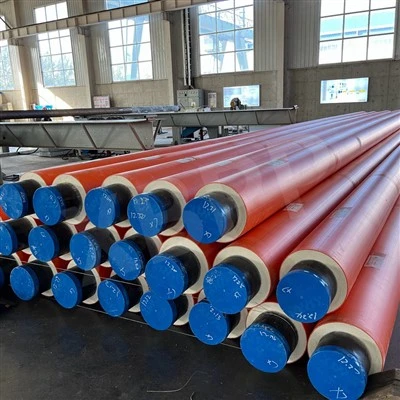


Products Description

District cooling piping is a type of insulation system typically used to transport chilled water for air conditioning and cooling systems in buildings. These pipes are designed with a highly-efficient insulation layer that helps to prevent heat transfer and maintain a constant temperature, ensuring better energy efficiency and cost savings. They are typically made of materials such as polyurethane foam, outer jacket pipe, and carrier pipe, and can be customized based on the specific needs of a building.
Products Advantages
Energy efficiency
By reducing heat loss, district cooling piping helps heating systems run more efficiently, using less energy.
Moisture resistance
The outer casing of district cooling piping is usually made of water-resistant materials, preventing moisture from penetrating into the piping and increasing its lifespan.
Corrosion resistance
Both the piping material and the heat preservation material are corrosion-resistant, suitable for various media, and have strong anti-aging properties.
Good heat preservation performance
The heat preservation performance of district cooling piping is excellent, reducing heat loss and maintaining stable temperatures within the piping.
Good sealing performance
The piping has a special sealing design at the joints, effectively preventing leaks and ensuring the safety of piping operation.
Wide application scope
District cooling piping is widely used in petrochemical, electric power, light industry, water conservancy, urban heating, and construction industries, providing important support for their development.
Products Types
District cooling piping comes in various types, each designed to meet specific needs and requirements. Depending on the manufacturing process, material selection, and usage scenario, district cooling piping can be classified into several categories.
Direct buried insulation pipe: One type is the direct buried insulation pipe, which is installed directly into the ground. This type of pipe is often used in areas where there is a need for a concealed installation, such as in urban areas or where visual appeal is important. The insulation provided by the pipe helps to reduce heat transfer and energy loss.
Overhead insulation pipe: Another type is the overhead insulation pipe, which is installed above ground, often supported by poles or brackets. This type of pipe is commonly used in open fields or where there is no buried space available. The insulation provided by the pipe helps to reduce heat loss and maintain a constant temperature.
One-step insulation pipe: The one-step insulation pipe is a type of pipe that combines the functions of both the direct buried and overhead insulation pipes. It has an outer layer of insulation that provides thermal insulation and a reinforced inner layer that withstands external pressure and load-bearing capacity. This type of pipe is suitable for use in complex and demanding applications where both thermal insulation and structural integrity are essential.
Composite plastic insulation pipe: Composite plastic insulation pipes are made of a combination of materials, typically fiberglass reinforced plastic (FRP) or polyethylene (PE). These materials provide good thermal insulation and durability, making them suitable for use in harsh environments where there are high levels of corrosion or mechanical stress.
High-temperature steam insulation pipe: Finally, high-temperature steam insulation pipes are designed to withstand high temperatures and are used in steam distribution systems. These pipes are made from high-temperature-resistant materials such as stainless steel or nickel-plated steel and are insulated to prevent heat loss and maintain steam temperature.
Each type of district cooling piping has its own unique characteristics and advantages, making it suitable for different applications and scenarios. Selecting the appropriate type of district cooling piping for a given project is essential to ensure optimal performance and durability.
Products Applications
Cold insulation pipes have a wide range of applications in the field of cold supply. They are mainly used in the following areas:
Refrigeration piping systems
Cold insulation pipes are suitable for use in the insulation of refrigeration piping systems. They effectively prevent heat loss from the pipes during the transportation of cold media, maintaining a low temperature state and improving the refrigeration efficiency.
Cold storage construction
Cold insulation pipes are ideal materials for use in the construction of cold storage facilities. They effectively isolate heat transfer from the external environment to the interior of the cold storage, maintaining stable temperature conditions and extending the time of food and other items.
Air conditioning systems
Cold insulation pipes can be used for the insulation of cold media and condensation water pipelines in air conditioning systems. They prevent condensation and frost formation on the pipelines, improving the efficiency of air conditioning and enhancing indoor comfort.
Industrial cooling systems
In industrial production, many devices require cooling. Cold insulation pipes can be used for the insulation of cooling water pipelines, preventing heat loss and enhancing cooling efficiency.
Products Customization
We can customize different specifications, models and parameters according to customer needs and specific application scenarios to meet your different needs.
Customization of pipeline and specifications
According to the customer's specific requirements, different diameters, lengths, and thicknesses of pipelines can be customized to meet different flow and pressure requirements.
Customization of pipeline materials
Depending on the customer's use environment and requirements, different materials and coatings can be selected to improve pipeline corrosion resistance, pressure resistance, and other properties.
Customization of connection methods
According to the customer's pipeline connection requirements, different types of connection methods can be provided, such as welding, flange connection, clamp connection, etc., to ensure the sealing and stability of the pipeline system.
Customization of other accessories
According to customer needs, other accessories such as elbow, tee, reducer, etc. can also be customized to improve the overall performance and service life of the pipeline system.
FAQ
Q: What are the main materials for prefabricated insulation pipes?
Q: How to choose a suitable prefabricated insulation pipe?
Q: What factors are related to the price of prefabricated insulation pipes?
Q: How to maintain and upkeep prefabricated insulation pipes to extend their service life?
Q: What is the development prospect of prefabricated insulation pipes?
Q: What is the service life of prefabricated insulation pipes?
Q: What issues should be noted in the maintenance and upkeep of prefabricated insulation pipes?
Q: What is the impact of burial depth on prefabricated insulation pipes?
Q: What is the temperature range of the medium transported by prefabricated insulation pipes?
We're well-known as one of the leading district cooling piping manufacturers and suppliers in China. If you're going to buy high quality district cooling piping, welcome to get quotation from our factory. Also, customized service is available.