


The outer protective layer is the outermost component of prefabricated direct-buried insulated pipes, serving to waterproof the pipe and withstand external loads. However, damage to this layer during transport is not uncommon, with most incidents occurring during loading, unloading, and transit.
Problems often arise during the lifting process. On some job sites, steel cables are used to bundle the pipes directly; the resulting constriction marks can crush or even crack the outer protective layer. Proper lifting procedures require the use of lifting straps at least 50mm wide, ensuring steady lifting and placement, and strictly prohibiting dragging or rolling the pipes along the ground. During vehicle transport, pipes must be securely fastened; securing points should not press directly against the outer protective layer but must be separated by soft padding. For long-distance transport, adjustable supports should be added to the middle of the pipe sections to prevent sagging under their own weight, which could cause the insulation layer to crack.
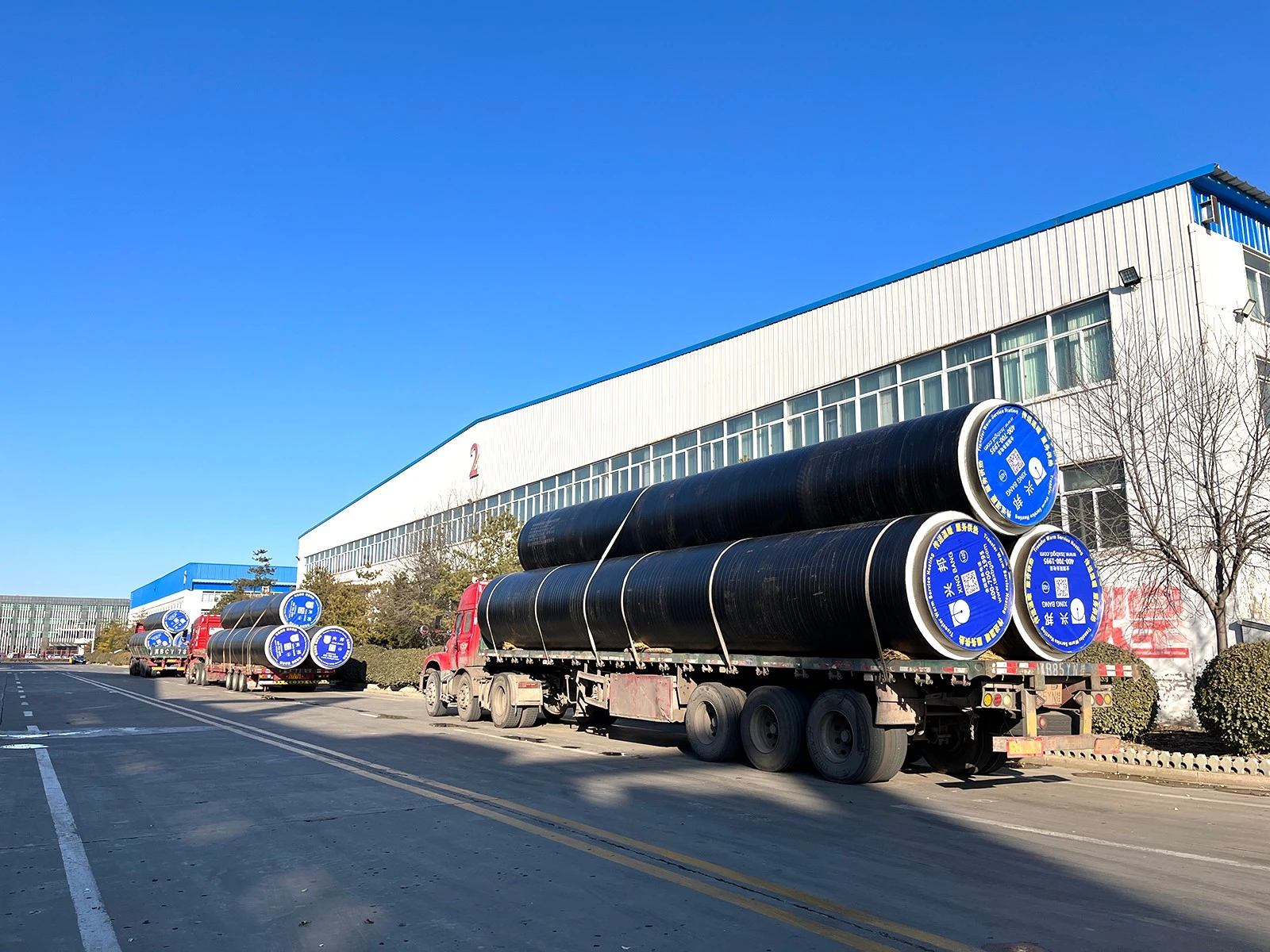
Storage also requires careful attention. If insulated pipes are stored outdoors upon arrival at the site, they must be elevated off the ground-typically requiring a clearance of at least 150mm between the pipe's underside and the ground surface. Drainage ditches should be constructed around the storage area to prevent accumulated water from soaking the pipe ends. Waterproof end caps must remain intact; if a cap is damaged or falls off, rainwater could seep into the insulation layer. During winter construction, insulated pipes should not be stored outdoors for extended periods; if backfilling cannot be completed promptly due to construction schedules, the trench should be partially backfilled to a level above the top of the pipe.
Care must also be taken to prevent impacts during loading and unloading. The outer protective layer is made of polyethylene; while it offers some impact resistance, collisions with sharp objects can still cause dents or cracks. Operators must ensure steady handling, avoiding collisions, dropping, or throwing the pipes. During transport, vehicles should be driven smoothly-avoiding sudden braking or sharp turns-and the condition of the pipes should be checked regularly so that any damage can be addressed immediately.
Preventing damage to the outer protective layer is not complicated; the key lies in properly executing the lifting, securing, and storage procedures. Issues arising before the pipes are buried are entirely avoidable.