


The high-density polyethylene outer protective pipe is the outermost layer of the prefabricated direct-buried insulated pipe, responsible for waterproofing and bearing external loads. Scratches on the surface of the outer protective pipe are common during transportation, hoisting, and construction. Site personnel often ask: Is this scratch serious? Can it be buried directly?
GB/T 29047-2021 and CJ/T 480-2015 clearly stipulate that the depth of scratches on the outer protective pipe should not exceed 10% of the minimum wall thickness of the pipe material and should not exceed 1mm. As long as the scratch depth meets both conditions, the structural layer of the outer protective pipe is not damaged, and the waterproofing and load-bearing capacity are not affected; it can be used directly. This limit is calculated based on the effective load-bearing thickness of the outer protective pipe wall. Minor scratches only damage the surface and do not weaken the effective thickness of the pipe wall.
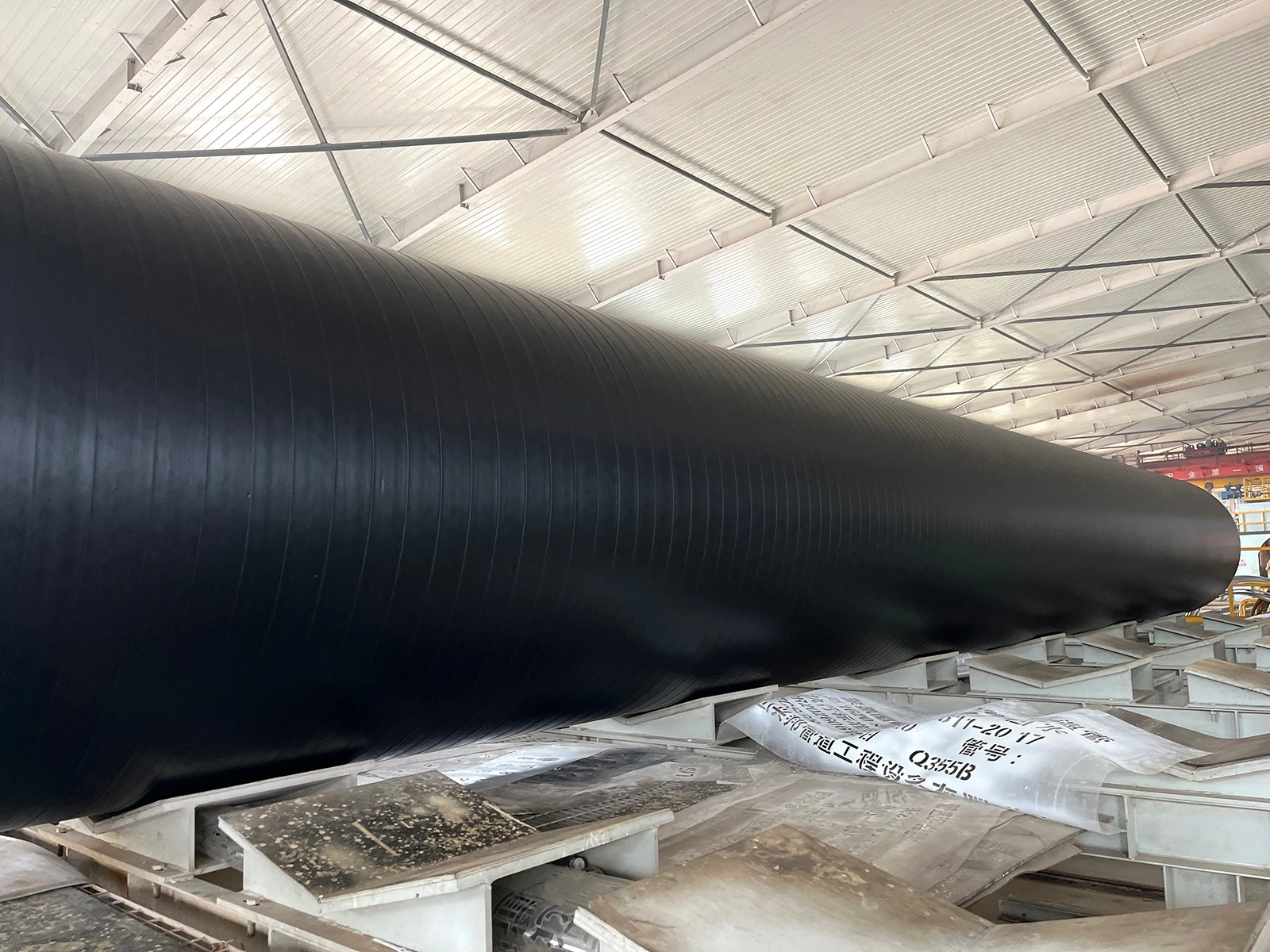
Deeper scratches are a different story. Once the 10% wall thickness limit is exceeded, the protective capability of the outer protective pipe is compromised. Groundwater may slowly seep in from the damaged area. The thermal conductivity of polyurethane foam increases dramatically when it gets damp, reducing its insulation performance. Over time, the foam will hydrolyze, and the steel pipe will corrode more rapidly. Different levels of damage require different treatments: scratches between 10% and one-third of the wall thickness can be treated with a hot-melt repair rod; for tears or those exceeding one-third of the wall thickness, a repair patch is needed, with the edge of the patch at least 100mm from the tear. After repair, check the appearance to ensure it is flat, without hollow areas, and without warping.
Prevention is easier than repair. Most scratches are caused by directly binding the outer protective pipe with wire ropes during hoisting; using nylon slings or specialized lifting tools can avoid this. The same applies to sharp stones at the bottom of the trench; simply clean them before backfilling. Inspect the entire outer protective pipe before construction and address any problems in advance; this is much simpler than digging it up after installation. Scratches don't necessarily mean the pipe is unusable; the key is whether the depth is sufficient and whether repair is necessary. Following standards will prevent problems.