


Insulation thickness is calculated based on factors such as the medium temperature, pipe diameter, and environmental conditions; it is not determined arbitrarily. If the actual thickness falls short of the design specifications, the resulting issues go far beyond merely "slightly higher heat loss."
The most immediate impact is increased heat loss. Thermal resistance is directly proportional to insulation thickness; insufficient thickness results in lower thermal resistance and greater heat dissipation. Taking a hot water pipeline as an example, a reduction of just 10 mm in insulation thickness can increase heat loss per unit length by 15% to 20%. For a pipeline network spanning several kilometers, this difference translates into a significant annual fuel cost.
Increased heat loss leads to another problem: an excessive drop in the medium's temperature. As hot water travels from the heating station, it continuously loses heat; if the insulation is too thin, the temperature may fail to meet design requirements by the time it reaches end-users. This issue is particularly pronounced in long-distance transmission networks. Complaints from end-users that "the heating isn't warm enough" can sometimes be traced back to this very cause.
Insufficient insulation thickness also affects the surface temperature of the outer protective casing. Standards generally require the casing surface temperature not to exceed 50°C; if the insulation is too thin, this limit may be exceeded. For direct-buried pipelines, excessively high casing temperatures accelerate the aging of polyethylene materials, thereby reducing service life. For overhead pipelines, high surface temperatures pose a risk of burn injuries.
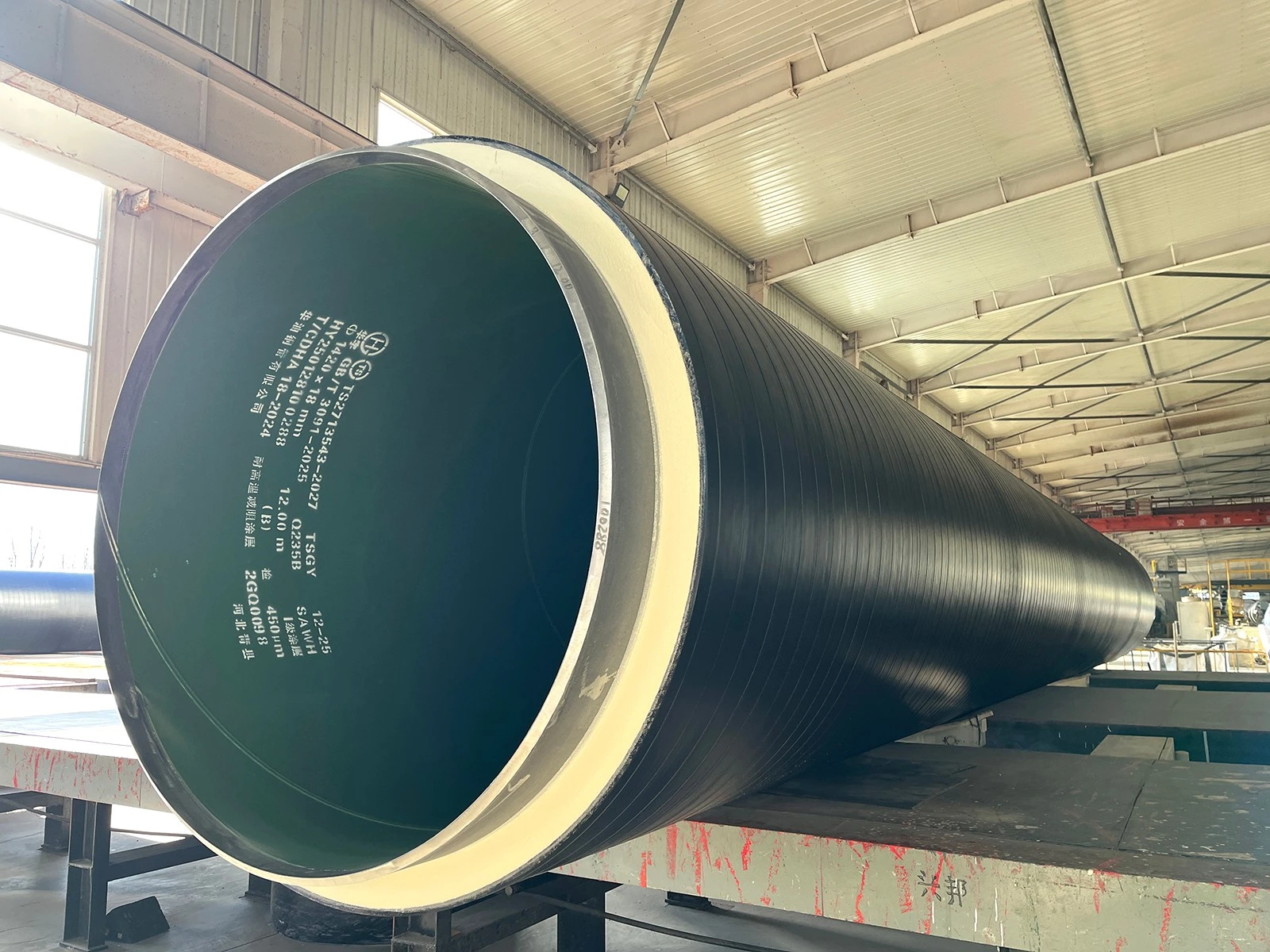
There is also an often-overlooked issue: insufficient insulation thickness causes the foam to operate at higher temperatures for extended periods. The long-term temperature limit for polyurethane foam is approximately 120°C. If the insulation layer is too thin, the foam's actual operating temperature may approach or even exceed this limit, accelerating thermal aging and shortening the pipeline's lifespan.
While "thicker isn't always better" (excessive thickness is costly and uneconomical), failing to meet design specifications is certainly unacceptable. Ensuring that manufacturers produce to the specified thickness and spot-checking for compliance during on-site acceptance are details that directly impact the economic efficiency and safety of pipeline operations.