


To ensure the longevity of an insulated pipe, the key lies in determining which component ages first. The foam layer is sensitive to heat and degrades from the inside out, while the outer protective casing is vulnerable to water and light, deteriorating from the outside in. Regular inspection of both the interior and exterior is essential for long-term service life.
Although the foam layer and the outer protective casing of an insulated pipe are bonded closely together, their aging mechanisms and rates differ significantly. Understanding which component ages first-and how that aging occurs-is crucial for assessing the remaining service life of the pipeline and scheduling maintenance.
The aging of polyurethane foam is primarily thermal. Typically, such foam can withstand temperatures up to 120°C; through modification or combination with other insulating materials, this threshold can be extended to 180°C. If the operating temperature consistently exceeds these limits, the polymer chains within the foam break down, leading to an increase in thermal conductivity, a loss of compressive strength, and shrinkage or even carbonization of the foam. Higher temperatures accelerate this aging process. Furthermore, foam degradation progresses from the inside out: the foam in direct contact with the surface of the steel carrier pipe is exposed to the highest temperatures and, consequently, ages first. As a result, when a long-service insulated pipe is cut open, the foam near the steel pipe often appears darker in color and brittle in texture, while the foam closer to the outer protective casing remains relatively intact.
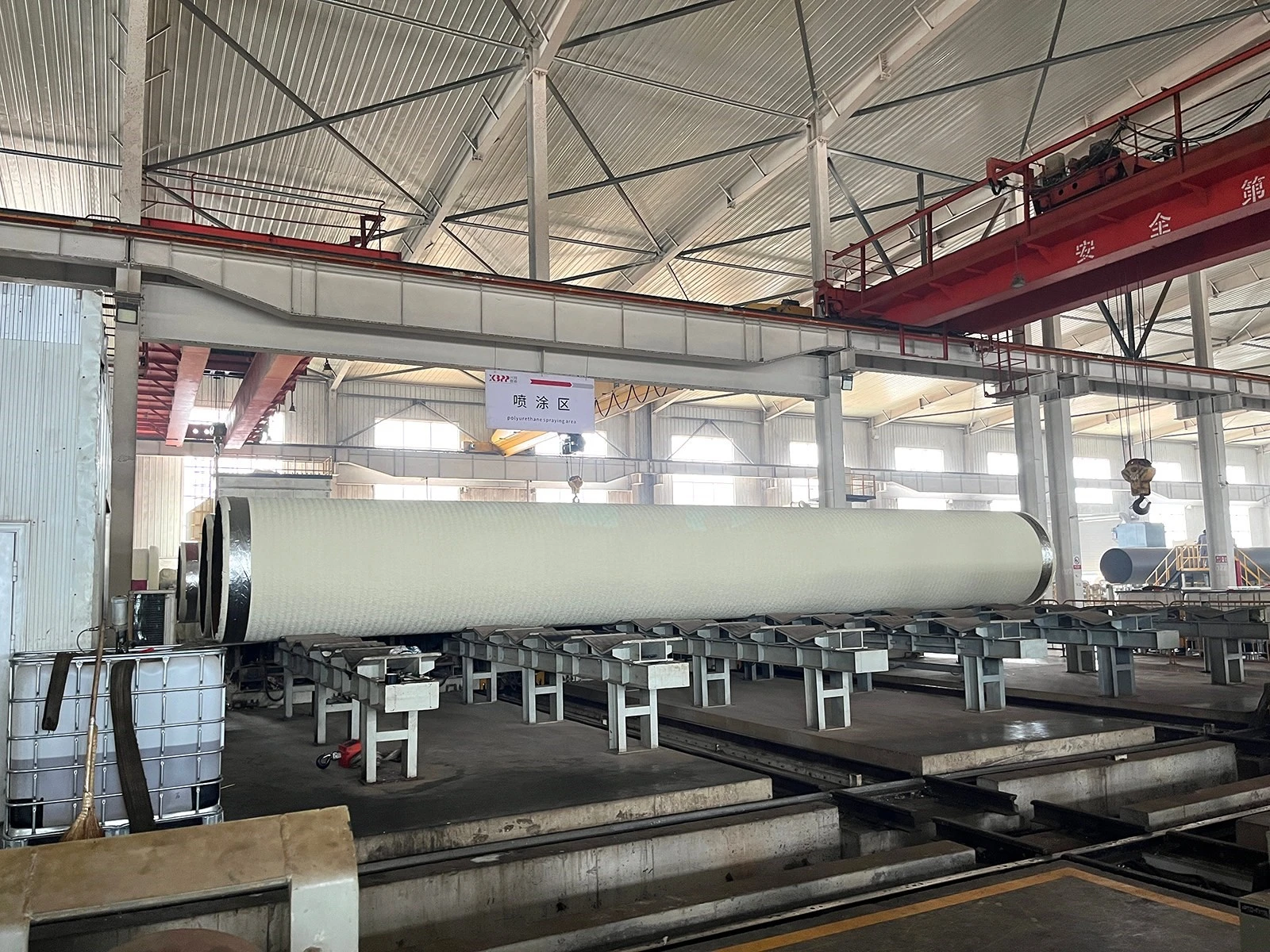
The aging of the outer protective casing is primarily environmental. When a high-density polyethylene (HDPE) casing is buried underground, it is subject to gradual degradation caused by soil chemicals, groundwater, and microorganisms. If the casing is exposed above ground-such as in overhead piping installations or during storage-ultraviolet (UV) radiation accelerates the aging process, causing the polyethylene to become brittle and crack under direct sunlight. Signs of aging in the outer casing include the appearance of micro-cracks on the surface, darkening of the material, and reduced impact resistance.
Which component ages first depends on the specific operating conditions. If the pipeline operates at high temperatures, the foam may fail before the outer casing-the foam could become carbonized while the casing remains in good condition. Conversely, if the pipeline is buried in corrosive soil or an area with a high water table, the outer casing may fail first-developing cracks while the foam layer remains largely unaffected. If a pipeline is installed above ground, its outer protective casing is exposed to ultraviolet (UV) radiation, which may cause it to age even faster than the foam insulation.
The aging processes of these two materials influence each other. Once the outer casing cracks, groundwater can seep into the foam layer, accelerating the foam's degradation. Conversely, if the foam shrinks, the outer casing loses its internal support, making it more susceptible to cracking under external forces. Pipeline maintenance should not focus on just one of these materials; both require regular inspection.