


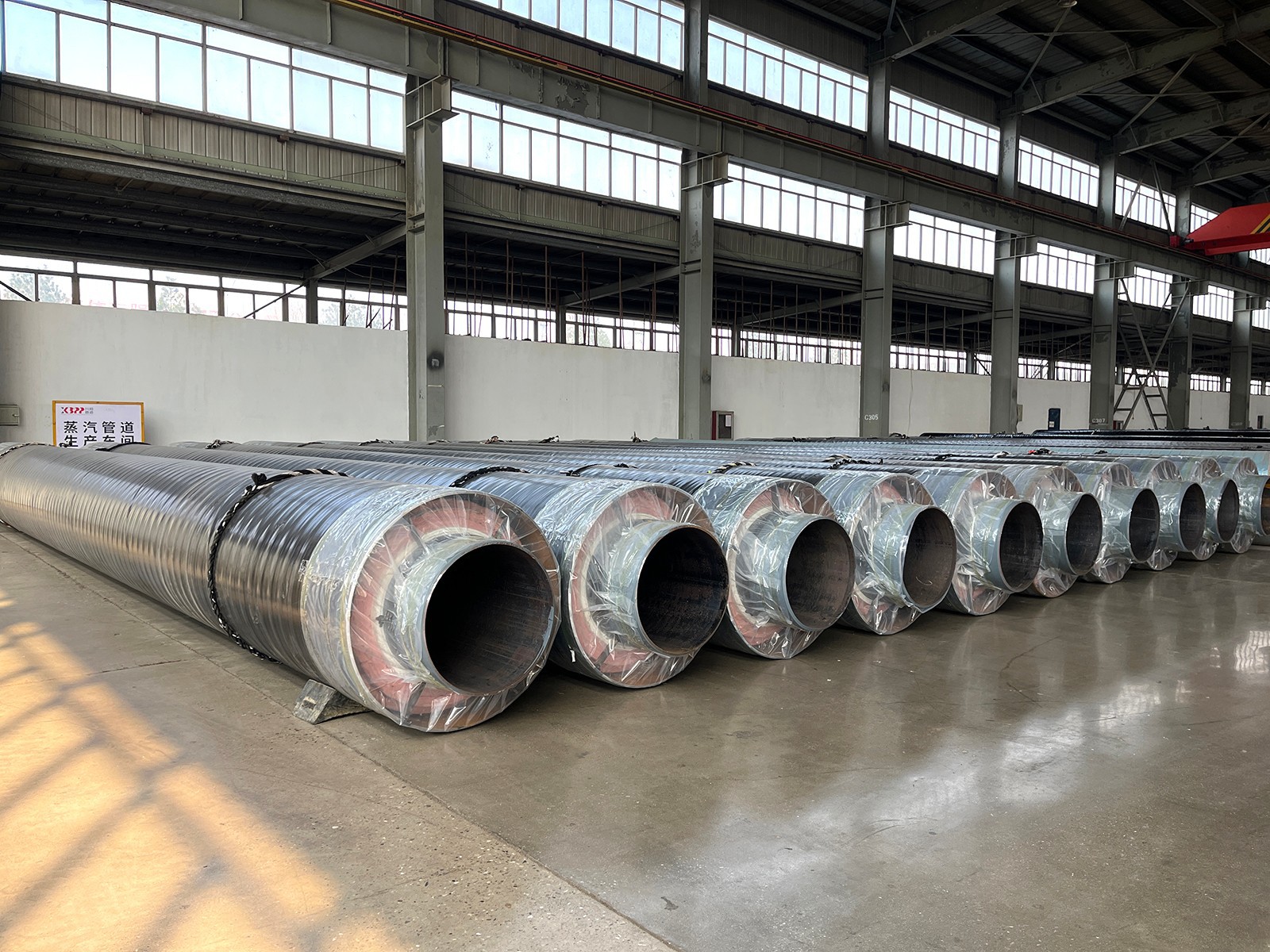
Glass wool and aerogel are the two materials most frequently compared when it comes to insulating steam pipelines. If one considers only the unit price, glass wool is significantly cheaper; however, when factoring in long-term heat loss and maintenance costs, the overall outcome is often surprising. The key to making the right choice lies in the medium temperature and the specific site conditions.
Glass wool is a mature material with a long history of application; its maximum applicable temperature is approximately 350–400°C, and its thermal conductivity ranges between 0.033 and 0.040 W/(m·K). Its primary advantages are low cost, stable supply, and established installation techniques. However, its drawbacks are equally evident: under prolonged exposure to high temperatures, it is prone to settling and shrinkage, which creates voids in the upper section of the insulation layer and leads to a sudden surge in heat loss. Furthermore, glass wool is susceptible to moisture and vibration; once damp, its thermal insulation performance deteriorates sharply. Consequently, it is best suited for straight pipe sections located in dry, stable environments with moderate temperatures.
Aerogel felt is a high-performance solution that has gained prominence in recent years. At ambient temperatures, its thermal conductivity can be as low as 0.018–0.021 W/(m·K); it withstands long-term temperatures exceeding 650°C and exhibits no settling, is hydrophobic, and possesses high compressive and tensile strength. Its greatest value lies in its ability to achieve equivalent insulation performance with a much thinner profile-for the same pipeline, glass wool might require a thickness of 80–100 mm, whereas aerogel requires only 20–30 mm. This makes it an indispensable choice in situations involving limited space, complex valve and elbow configurations, or the presence of vibration. Its primary disadvantage is that its unit price is approximately 5 to 8 times that of glass wool.
So, how should one decide the actual procurement process? If the steam temperature does not exceed 350°C, the pipeline consists primarily of long, straight sections (whether buried or overhead), and the project is sensitive to initial investment costs, glass wool represents an economically sound and rational choice. Conversely, if the temperature exceeds 400°C, or if the pipeline is situated in a humid, high-vibration, or space-constrained environment, forcing the use of glass wool will likely result in frequent maintenance requirements and excessive heat loss, ultimately leading to higher overall lifecycle costs. A more common and effective approach in such cases is to employ a composite insulation structure: utilizing an inner layer of aerogel to provide high-temperature resistance and prevent settling, while using an outer layer of glass wool to reduce costs-thereby striking an optimal balance between performance requirements and budgetary constraints.