


Under the "Dual Carbon" goals-aimed at achieving peak carbon emissions and carbon neutrality-heating companies face not only environmental compliance pressures but also a new opportunity to transform energy conservation into tangible revenue. In the past, high heat loss in distribution networks simply meant burning more coal or consuming more natural gas, thereby increasing operational costs. Now, however, the actual reduction in carbon emissions achieved by minimizing heat loss can be directly monetized through carbon trading markets. This is no longer merely a technical challenge; it is a clear-cut economic calculation that makes sound financial sense.
Heat loss in distribution networks primarily occurs in three areas: the aging and failure of pipe insulation layers; water ingress or cracking at pipe joints and connection points; and inadequate insulation coverage at irregular components such as valves and elbows. In particular, for pre-insulated direct-buried pipes-if the outer protective casing is damaged or the internal foam insulation becomes saturated with moisture-the thermal conductivity coefficient can skyrocket from a healthy baseline of 0.024 W/(m·K) to over 0.05 W/(m·K), effectively doubling the rate of heat loss. For a heating company serving a coverage area of several million square meters, the annual consumption of standard coal-attributable solely to heat loss-can amount to thousands of tons, resulting in a correspondingly substantial volume of carbon emissions.
To generate carbon revenue, the first step is to convert the "carbon saved" into a tradable asset. The specific pathway involves implementing energy-saving retrofits or conducting precision maintenance on the distribution network. A third-party verification agency then quantifies the energy savings-derived from the reduction in heat loss-both before and after these interventions. These energy savings are subsequently converted into carbon emission reductions, which are then submitted for verification and listed for trading in accordance with local carbon market regulations. Currently, in several pilot cities across China, the price of carbon allowances has stabilized within the range of 50 to 80 RMB per ton. For a 20-kilometer main trunk pipeline, a mere 15% reduction in heat loss could prevent approximately 2,000 tons of carbon emissions annually. The carbon revenue generated from this alone could approach 100,000 to 150,000 RMB-in addition to the direct, tangible savings on natural gas or coal consumption.
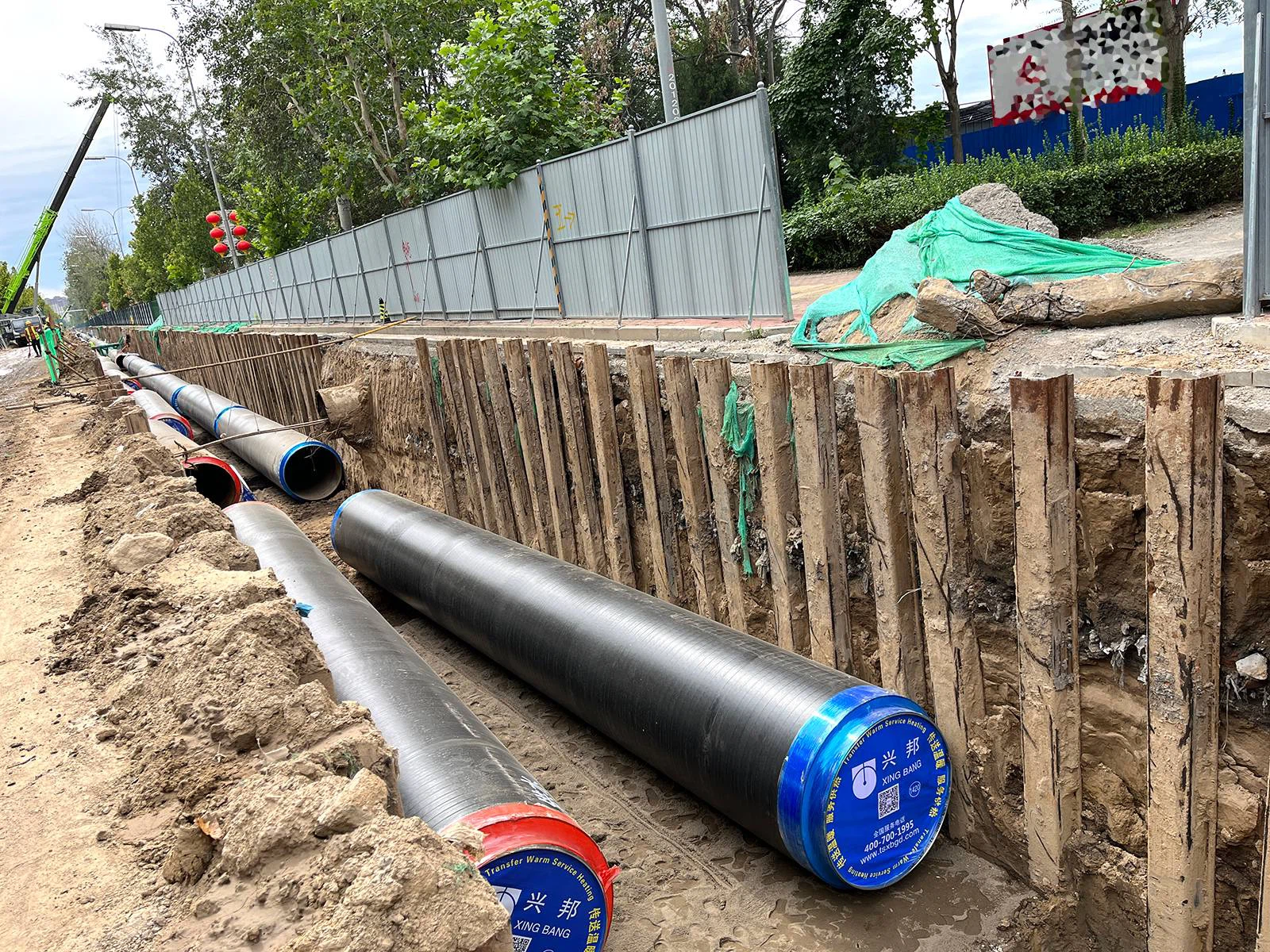
So, where should heating companies begin? For aging distribution networks that have been in operation for over a decade, the primary vulnerabilities lie in the settling and cracking of insulation layers and the deterioration of outer protective casings. A comprehensive replacement strategy-upgrading to pre-insulated direct-buried pipes featuring high-density polyethylene (HDPE) outer casings and polyurethane foam insulation-can effectively restore heat loss levels to below the original design specifications in a single, decisive step. For relatively new pipeline networks, the primary focus of inspections should be on identifying insulation blind spots at field joints and within valve pits. This involves utilizing heat-shrinkable sleeves to standardize joint sealing and pre-customizing aerogel-based insulation felts for irregularly shaped components-measures that are low in cost yet yield immediate results in reducing heat loss. Carbon dividends are not merely a distant policy concept; rather, they represent tangible returns that can be realized for every single joule of heat loss prevented.