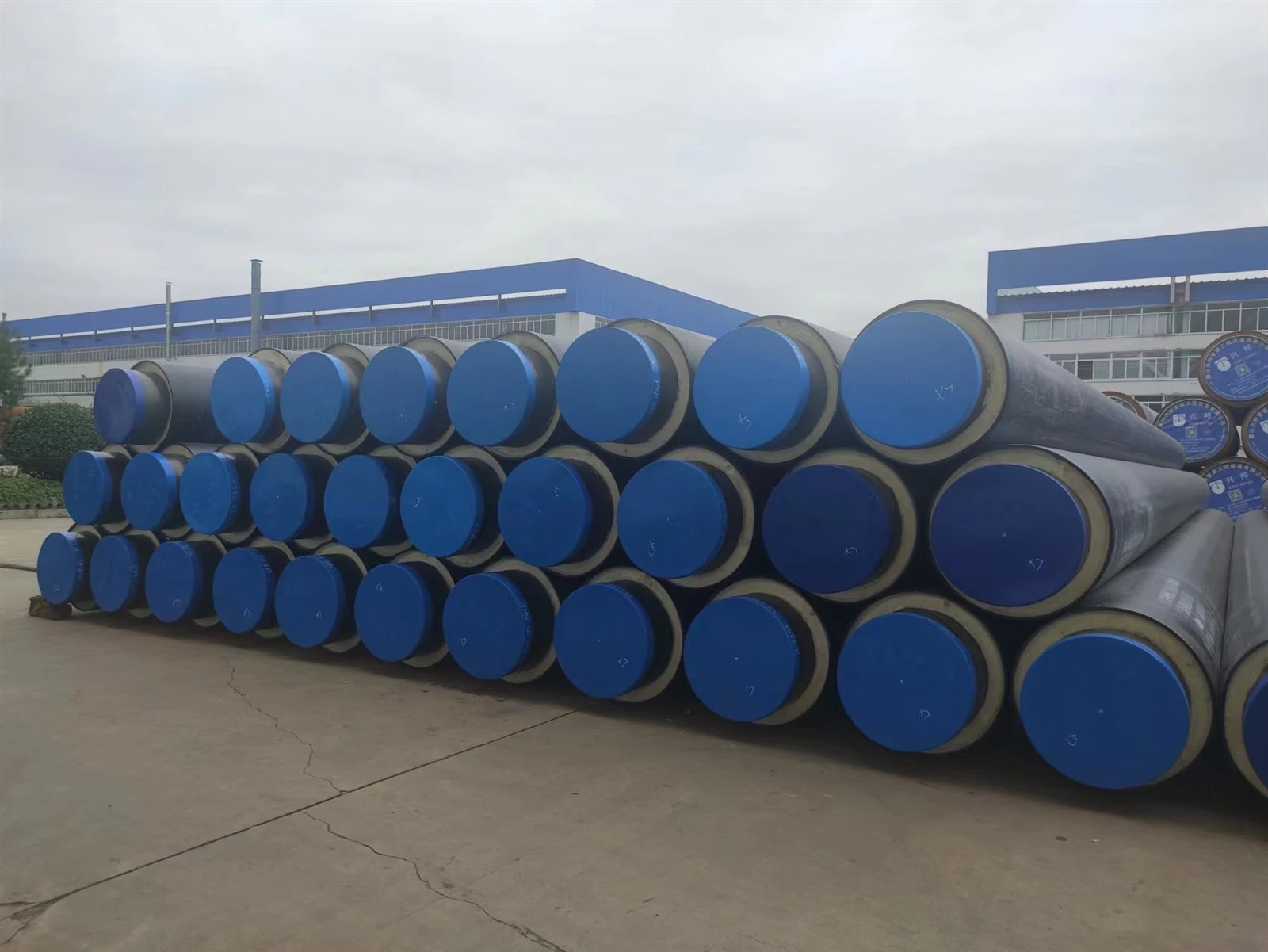

Analysis of the Causes of Cracking in Polyurethane Prefabricated Directly Buried Insulation Pipes
Polyurethane prefabricated buried insulation pipes have a three-layer structure, mainly composed of external insulation pipes, insulation layers, and working pipes. It has the characteristics of easy installation, safety, low cost, and simple construction. However, in the actual installation process of engineering, various factors may also affect it, so various cracking problems may also occur. From the perspective of the structure and properties of the material itself, the specific reasons for the cracking of polyurethane prefabricated buried insulation pipes mainly include the following two aspects:

1) Cracking caused by the characteristics of the material itself
During the on-site construction of polyurethane prefabricated buried insulation pipes, cracking may sometimes occur. There are a large number of insulated elbow pipes, which are closely related to the relevant structural characteristics, and the larger the angle, the more severe the cracking. The insulated elbow is made using cold simmering technology, which has high pressure and the bending shape will also cause certain axial constraints on the entire polyethylene outer protection. In this case, the stress of the polyethylene outer protective pipe is also very complex, and it will be constrained in both axial and radial directions. Compared with insulated straight pipes, this insulated bend pipe is more prone to cracking. For some insulated elbows that have already been welded or need to be connected, when the temperature changes, the longer metal pipe section will exert a greater force on the elbow, causing it to stretch in a straight direction and easily deform. In this way, when deformation occurs, it will cause significant stress on the entire polyethylene outer protective pipe, making it easy to crack.

2) The physical properties of the three materials used for cracking polyethylene polyurethane insulation pipes vary greatly.
The linear expansion coefficients of HDPE, steel pipe and polyurethane foam are 300 respectively × 10-6 ℃, 10.6-12.2 × 10⁻⁶ ℃ and 40 ℃ × 10-6HT, the linear expansion coefficient of high-density polyethylene is 25-28 times that of steel pipe, and 7.5 times that of the whole polyurethane foam. If the temperature drops, there will be a significant difference in material shrinkage and stress. In the application process, with the increase of shrinkage rate and temperature difference, its plasticity increases, while the plasticity of high-density polyethylene decreases with the decrease of temperature. In this way, when the temperature drops, the plastic reserve cannot compensate for all the shrinkage. This phenomenon can also lead to cracking of polyurethane prefabricated buried insulation pipes.