



What is the industrial steam pipeline?
The industrial steam pipeline is a high-temperature, high-pressure steam transmission system designed by Xingbang specifically for sectors such as petrochemicals, chemicals, and power generation. It features a "steel-in-steel" composite structure and multi-layer graded insulation materials, suitable for temperatures ranging from 150°C to 350°C and an operating pressure of 2.5 MPa. The product comes in two structural configurations: "inner-sliding" and "outer-sliding." The outer-sliding type is the current mainstream choice; it offers advantages such as clear structural load distribution and excellent moisture drainage, making it suitable for direct-burial installation in areas with high groundwater levels. Xingbang possesses the manufacturing capability for a full product range (DN20–DN1200 mm) designed to industrial standards. These pipelines are widely used in domestic and international projects-including petrochemical facilities, power plants, and industrial park centralized steam supply systems-effectively meeting the rigorous safety and stability requirements of industrial clients.
What are its components?
Working steel pipe
Typically made of 20# seamless steel pipe to directly transport the high-temperature steam medium.
Composite insulation layer
A composite of materials such as calcium silicate, rigid polyurethane foam, and glass wool, achieving graded thermal insulation.
Outer protective pipe
Steel outer casing equipped with 3PE or fusion-bonded epoxy (FBE) anti-corrosion coating.
Product advantages
1. Temperature resistance up to 350°C and pressure rating of 2.5 MPa
Suitable for temperatures of 150°C–350°C and an operating pressure of 2.5 MPa, with a burst pressure at least three times the operating pressure. It fully meets the demanding requirements for long-distance, high-temperature, and high-pressure steam transmission in the petrochemical, chemical, and power industries.
2. Heat loss reduced by 70%; temperature drop ≤3°C per kilometer
Utilizing multi-layer composite graded insulation combined with an aluminum foil reflective layer, heat loss is reduced by over 70% compared to traditional piping. The temperature drop is controlled to within 3°C per kilometer, delivering significant energy-saving benefits during long-term operation.
3. 3PE Anti-corrosion + Moisture Venting/Monitoring; 30-Year Service Life
The outer protective casing features a 3PE anti-corrosion coating that effectively resists soil corrosion. An integrated moisture venting pipe expels moisture and doubles as a leak detection signal line, facilitating rapid fault localization; the design service life is 25–30 years.

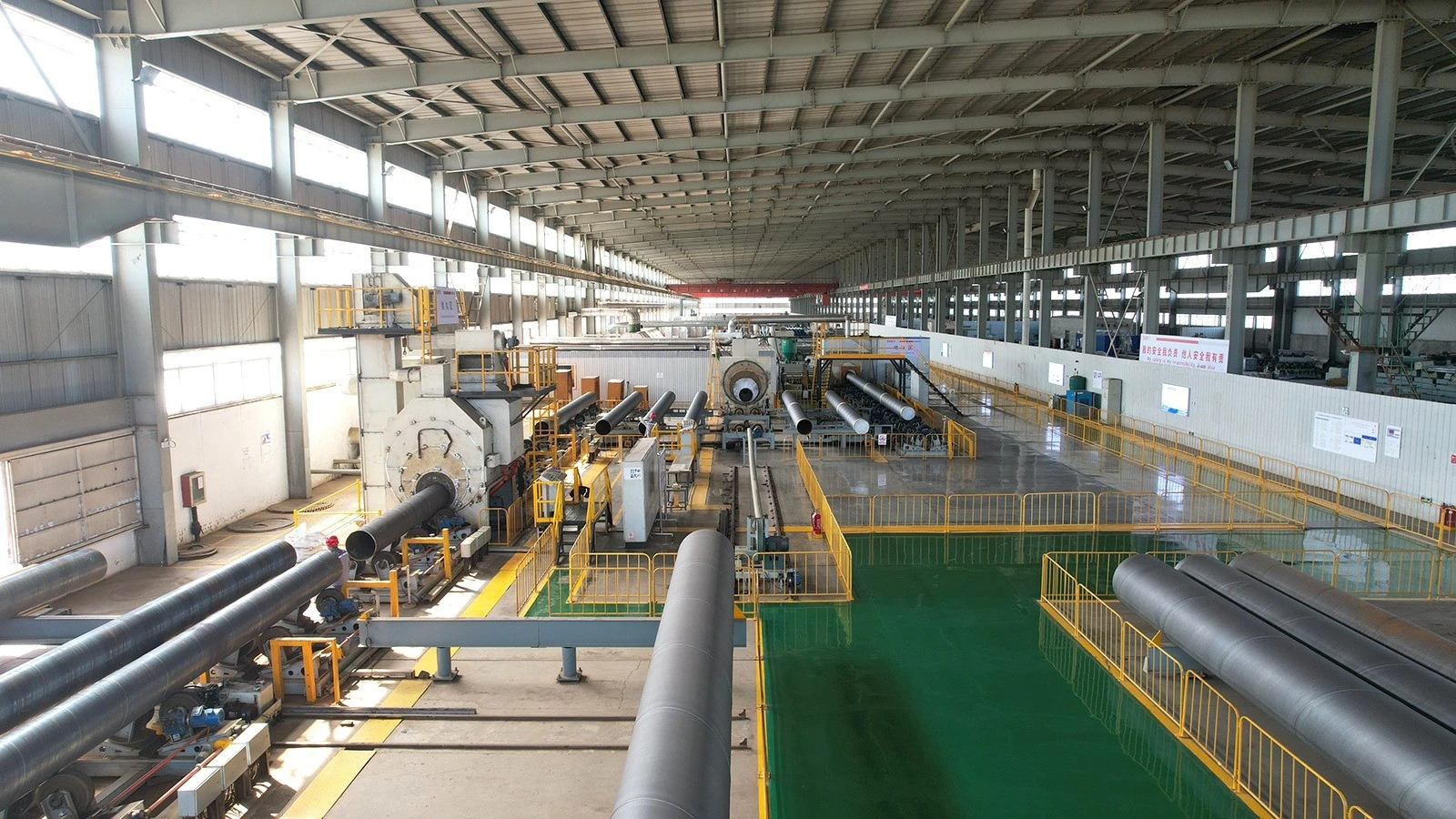

What process innovations has Xingbang introduced?
As an industry leader, Xingbang has implemented multiple technical innovations building upon traditional manufacturing methods:
Breaking through traditional "pipe-in-pipe" limitations: Conventional "pipe-in-pipe" methods suffer from drawbacks such as high equipment investment and low efficiency. Xingbang independently developed the "one-step molding process" and the "polyurethane spraying with polyethylene winding process."
Enhancing efficiency and performance: These new processes increased production efficiency by 20%–40% and reduced production costs by 2%–5%, while significantly improving overall product performance and reducing heat loss by approximately 10%.
Automated production: Xingbang also developed a fully automated production system for insulation-wool-type steam insulation pipes, enabling a continuous, automated workflow from steel pipe loading to the application of the outer protective layer.
FAQ
Q: How do I choose between the "inner-sliding" and "outer-sliding" structures?
A: The outer-sliding structure offers straightforward stress analysis and excellent moisture venting capabilities, making it the mainstream choice both domestically and internationally. The inner-sliding structure is compact and suitable for general operating conditions. For projects with high groundwater levels or strict moisture venting requirements, the outer-sliding structure is recommended.
Q: How are the joints of industrial steam pipeline handled?
A: Joint treatment involves three steps: welding the working steel pipe (following successful flaw detection), insulating the joint (filling with insulation material matching the pipe body), and sealing the outer protective casing (via welding or heat-shrinkable tape) to ensure consistent performance across the entire pipeline.
Q: What should be noted regarding the operation and maintenance?
A: Regularly check the status of the moisture venting pipe for abnormal venting or steam leaks. Inspect the ground along the pipeline route for anomalies such as subsidence or escaping steam. Periodically test the integrity of the anti-corrosion coating. It is recommended to maintain operational records tracking changes in key parameters like temperature and pressure.
Hot Tags: industrial steam pipeline, China industrial steam pipeline manufacturers, suppliers, factory, Steam Thermal Insulation Pipes, Steel Jacket Thermal Insulation Pipes, Steel Sleeve Sliding Insulation Pipe