


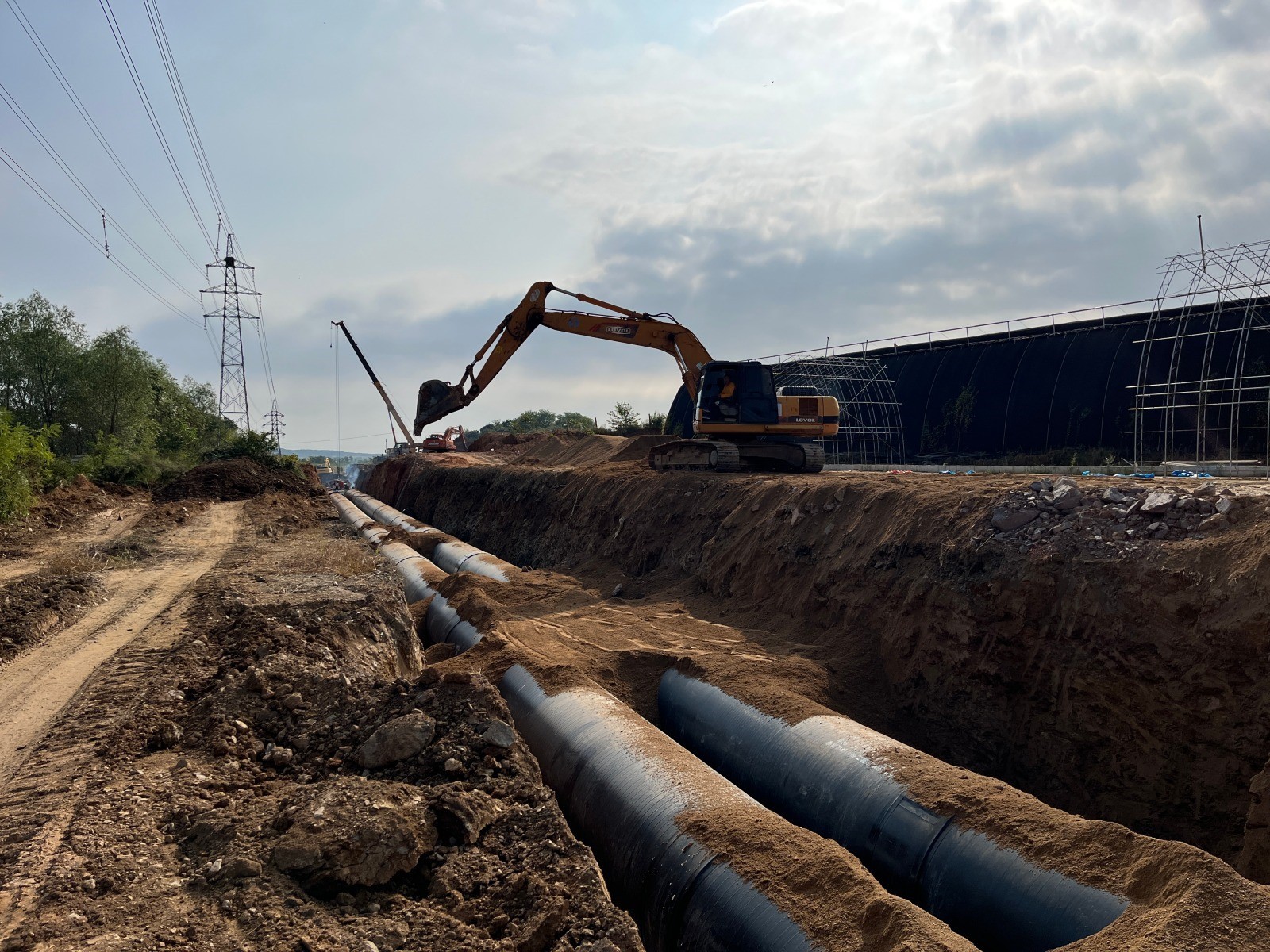
When planning pipeline projects, many often find themselves torn between trench-laid pipes and direct-buried pipes, sometimes even falling into decision-making traps due to preconceived notions. In reality, neither method possesses an absolute advantage or disadvantage over the other; the key lies in determining which option perfectly aligns with your specific project requirements. As a pipeline manufacturer, we would like to share some objective insights to assist you in making an informed decision.
Myth #1: Overemphasizing a Single Aspect of Safety
The primary advantage of trench-laid pipes lies in their accessibility. Since the pipes are exposed within a pipe gallery, they facilitate easy inspection and maintenance-making them particularly well-suited for industrial facilities that require frequent servicing. Conversely, the safety of direct-buried pipes is defined by their structural integrity. Standard-compliant, prefabricated direct-buried insulated pipes feature an integrated "steel pipe–insulation layer–outer casing" structure, which effectively resists soil corrosion and boasts a designed service life of over 30 years.
Myth #2: Underestimating the Ease of Maintenance for Direct-buried Pipes
The notion that damage to direct-buried pipes inevitably necessitates large-scale excavation is now outdated. Modern direct-buried pipe technology is supported by a mature repair ecosystem; utilizing standardized procedures-such as heat-shrinkable sleeves and electrofusion couplings-it is possible to execute rapid and reliable localized repairs.
Myth #3: Focusing Solely on Initial Construction Costs
A sound decision should be based on the total lifecycle cost. Trench-laid pipes entail higher civil engineering costs, and maintenance expenses continue to accrue throughout their operational life. While the unit cost of direct-buried pipes may be higher, they result in significant savings on civil engineering work and require minimal maintenance in the long run; from a long-term operational perspective, direct-buried pipes often prove to be the more economical choice.
The selection of a pipe-laying method should be driven by specific project requirements, taking into account a comprehensive analysis of geological conditions, maintenance demands, and economic feasibility. We recommend prioritizing direct-buried pipes for urban district heating systems and long-distance transmission lines, while trench-laid pipes are better suited for industrial complexes and environments requiring frequent inspections. For large-scale projects, a hybrid installation model-combining both methods-may be the optimal approach. As professional pipeline manufacturers, we are dedicated to providing our clients with the most suitable pipeline system solutions for their needs.