


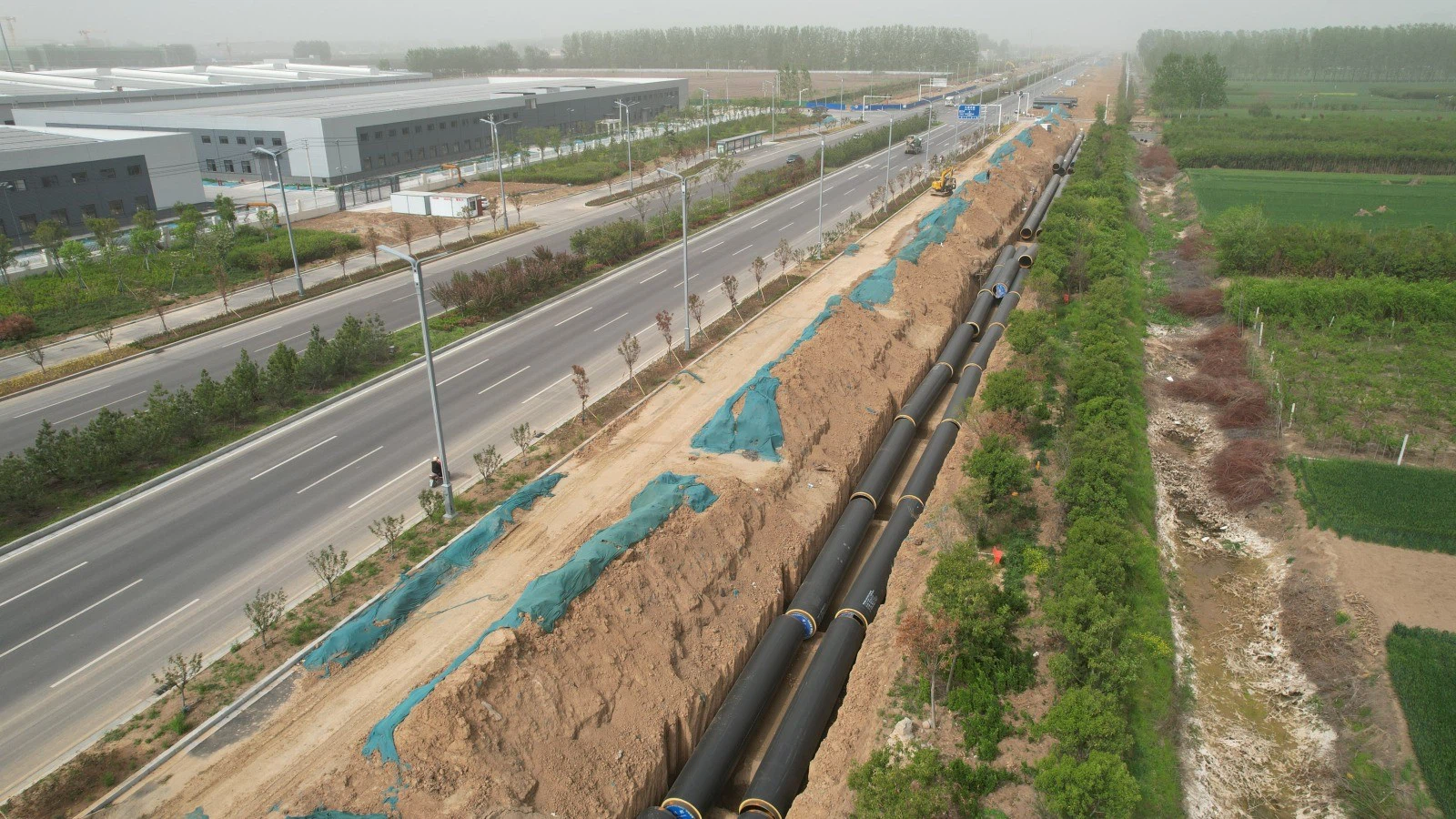
In the planning of heating supply networks, many people assume that the deeper the insulated pipes are buried, the greater the insulating effect provided by the surrounding soil, and consequently, the lower the heat loss. While this notion may seem logical, it is, in fact, a misconception.
In reality, there is a scientifically sound and optimal range for pipe burial depth. From a geological perspective, at depths exceeding approximately 1.5 to 2.0 meters below the surface, the ground temperature enters a stable "constant-temperature zone" and is no longer influenced by fluctuations in ambient air temperature. Burying pipes to this depth is sufficient to prevent damage caused by frost heave; burying them any deeper offers no substantial benefit in terms of enhancing thermal insulation.
More importantly, burial depth has a significant impact on both the economic viability and safety of a project. For every additional meter of depth, not only does the volume of required earthworks skyrocket, but the costs associated with trench shoring-necessary to prevent collapse-as well as the inherent construction risks, also rise sharply. Incurring such exorbitant costs for a negligible gain in thermal insulation is clearly a case of diminishing returns.
The true determinant of thermal insulation effectiveness lies in the performance of the pipes themselves. Modern, high-performance pre-insulated pipes-featuring a composite structure comprising a "working steel pipe," a polyurethane insulation layer, and a high-density polyethylene outer casing-constitute a highly efficient thermal insulation system in their own right; their insulating performance is primarily determined by their intrinsic quality. A high-quality insulation layer combined with a tightly sealed outer casing can maximize heat retention-a function that far outweighs the insulating contribution of the surrounding soil.
Therefore, the scientifically sound approach is to determine a reasonable "minimum burial depth" based on the local frost line to ensure pipe safety, while shifting the primary focus to selecting pipe products that possess exceptional inherent insulation and sealing capabilities. This is the most economical and efficient way to achieve energy conservation objectives.