


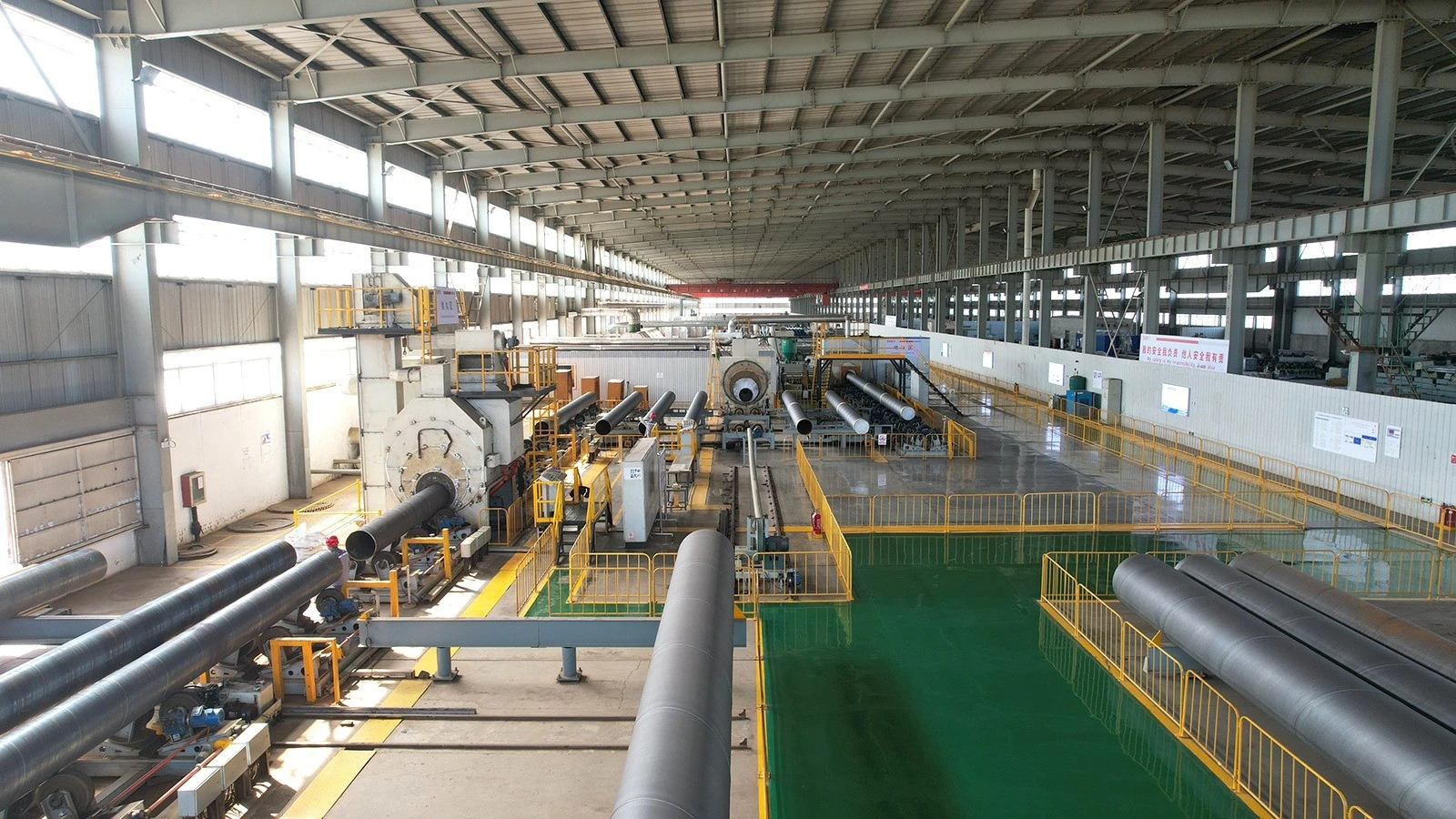
In the manufacturing process of polyurethane pre-insulated direct-buried pipes, steel pipes must undergo preheating before entering the foaming stage. Although this step may appear simple, it directly impacts the final quality of the insulation layer.
Polyurethane foaming is a chemical reaction highly sensitive to ambient temperature. The standard temperature range for foaming is 5°C to 40°C, with an optimal range of approximately 18°C to 25°C. If the steel pipe temperature is too low, the foaming polyurethane contracts rapidly upon contact with the cold surface; this slows the curing process and disrupts bubble formation and distribution, resulting in uneven foam density and significantly compromised insulation performance. Manufacturers have observed that when foaming is performed in winter without preheating, cross-sections of the foam often reveal uneven textures and inconsistent cell sizes-issues directly caused by low temperatures.
Preheating also helps ensure strong adhesion between the foam and the steel pipe. During the spraying or pouring of rigid polyurethane foam, insufficient surface temperature on the substrate (the pipe) significantly reduces bond strength. Data indicates that failure to meet temperature requirements weakens the adhesion between the polyurethane foam and the substrate. Over time, gaps or voids may form between the foam layer and the steel pipe. Such voids compromise the pipeline's overall structural stability, alter the stress conditions experienced by the steel pipe during thermal expansion and contraction, and shorten the service life of the insulation layer. Preheating the steel pipe before foaming is essential to ensure the uniform distribution of the polyurethane foam.
Preheating temperatures are typically maintained between 40°C and 60°C. Temperatures that are too low result in incomplete foaming reactions, making it difficult to guarantee consistent foam density and cell uniformity; conversely, excessively high temperatures can trigger premature foaming, which also impairs the uniformity of the insulation layer. Preheating becomes a mandatory process step when the ambient temperature falls below 15°C. Manufacturers often adjust their preheating protocols based on specific weather conditions to ensure the steel pipe temperature meets the required standards. Preheating the steel pipe is a crucial step in ensuring the quality of the insulation layer; its purpose is to maintain consistent production temperatures across different seasons, thereby ensuring stable insulation material quality. If this step is not performed correctly, it is difficult to compensate for the deficiency, no matter how well the subsequent foaming, curing, and inspection processes are executed.