


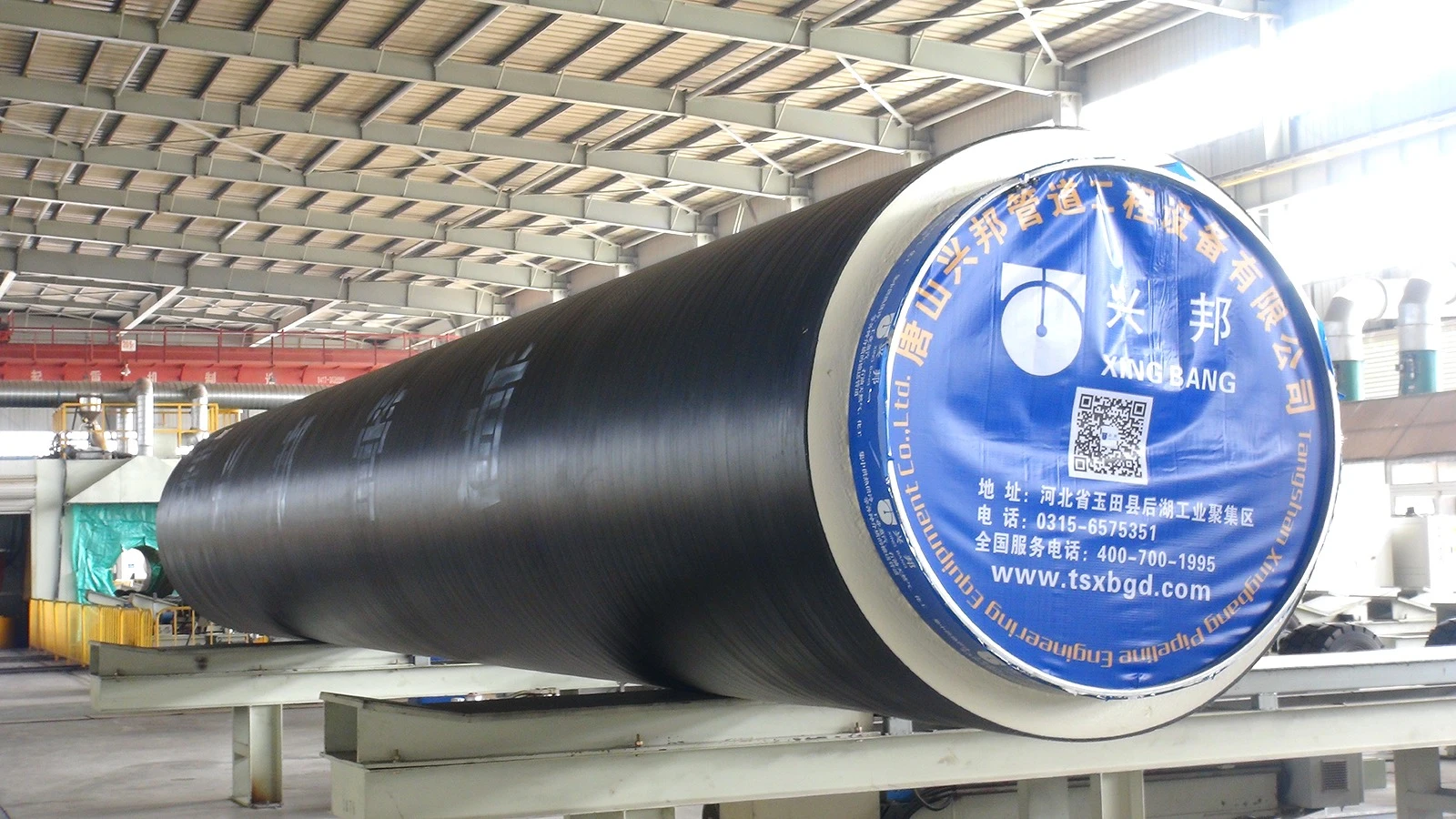
In the insulated pipe market, price quotes from different manufacturers for products of the same specifications can vary significantly. Many buyers might think, "The pipes look pretty much the same; the cheaper ones will do the job." In reality, however, there are substantial differences between products from small workshops and those from major manufacturers-differences that ultimately impact the pipe's service life and maintenance costs.
Let's start with production equipment and processes. Major manufacturers typically employ automated continuous production lines and precision foaming control systems. These allow for exact control over polyurethane mixing ratios, temperature, and pressure, ensuring uniform foam density and meeting standards for closed-cell content. For instance, the "one-step" process molds the inner pipe, insulation layer, and outer casing into a composite unit in a single operation, keeping thickness deviations within a very tight range. In contrast, small workshops often rely on manual spraying or semi-automated equipment, resulting in uneven insulation thickness and inconsistent quality. This gap in manufacturing processes directly determines product consistency and reliability.
Raw materials and formulations are another critical factor creating this divide. The quality of polyurethane foam hinges on the quality of the isocyanate and the polyether blend. Major manufacturers insist on using certified raw materials, whereas small workshops-seeking to cut costs-may mix by-products into the "black material" (isocyanate component) or blend recycled or expired materials into the "white material" (polyol component). Regarding the outer casing, major manufacturers use virgin, pipe-grade raw materials, while small workshops often mix in recycled plastics. While these material differences are hard to spot in the finished product's appearance, they become evident after a few years in the form of foam aging rates and the outer casing's resistance to cracking.
Testing capabilities are equally important. Under the GB/T 29047 standard, insulated pipes must undergo various tests-such as foam density, closed-cell content, thermal conductivity, and outer casing tensile strength-before leaving the factory. Major manufacturers generally maintain specialized testing centers and quality control systems, conducting inspections throughout the entire process from raw material intake to final product dispatch. Small workshops, however, may lack even basic testing equipment and might resort to purchasing fake quality inspection reports to pass acceptance checks. Without proper testing, quality cannot be guaranteed.
Technical expertise and after-sales service also mark a clear dividing line. Major manufacturers invest heavily in product R&D and standards development; they offer mature technical solutions for non-standard diameters, specialized anti-corrosion requirements, and complex operating conditions, while also deploying on-site teams to guide joint sealing and installation. In contrast, smaller manufacturers suffer from inherent limitations in R&D, often failing to provide solutions for unique project requirements or keep pace with after-sales service needs.
Overall, the low prices offered by smaller manufacturers stem primarily from cost-cutting in equipment, raw materials, testing, and services-compromises that ultimately translate into increased heat loss and more frequent maintenance during pipeline network operation. While price is certainly a key factor in procurement, understanding exactly where the quality gaps lie is essential for making a sound, reliable choice.