


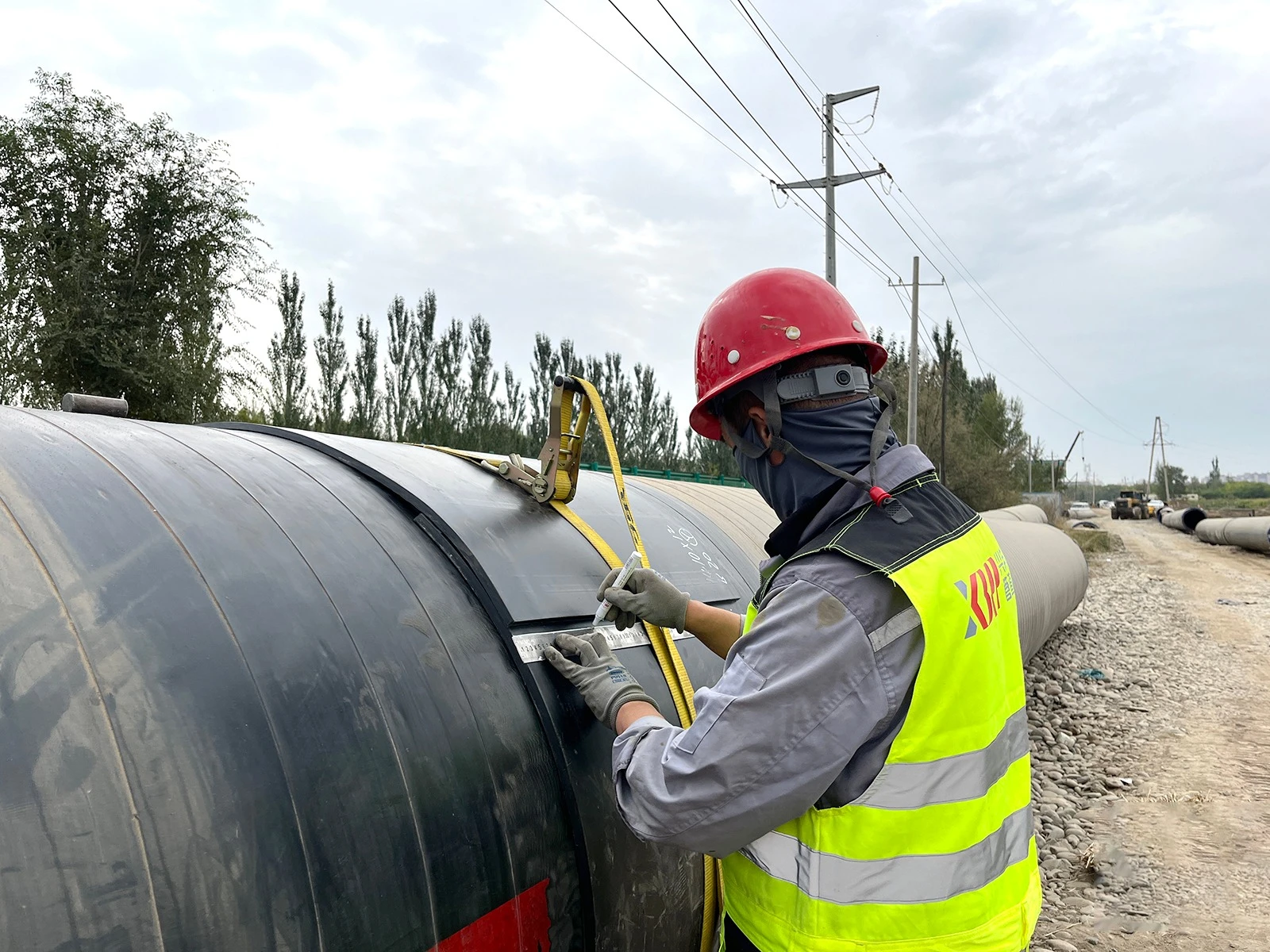
Insulated pipes are buried underground, and daily work relies entirely on inspections to assess their condition. The question arises: which areas are most prone to problems? Identifying key areas makes inspections more targeted.
First, let's discuss the locations of joints and connections. In pipeline operation, the most common problem areas are not the pipe itself, but the joints. Joints require on-site welding of the outer protective pipe, heat-shrinkable tape sealing, and on-site foaming, making the construction conditions far less controllable than in a factory. If the seal is not tight, groundwater or moisture will seep into the insulation layer. Prolonged water immersion will cause the polyurethane foam to hydrolyze and age, losing its insulation function and even crumbling. Inspectors should follow the pipeline route, focusing on checking the backfill surface at joints for signs of localized subsidence or dampness. If possible, open inspection wells to observe the outer protective pipe joints for water stains or rust seepage.
Next, examine the outer protective pipe itself. The main functions of the high-density polyethylene outer protective pipe are waterproofing and bearing external loads. During backfilling, if there are sharp stones in the trench or if the ground settles unevenly after heavy vehicle traffic, the outer protective pipe may develop cracks or pits. During inspections, pay attention to any abnormal settlement, cracks, or localized depressions in the ground above the pipeline, as these are often indirect signs of damage to the outer protective pipe. Once the outer protective pipe is damaged, groundwater will directly contact the polyurethane insulation layer, causing irreversible failure.
Another easily overlooked area is valve wells, compensators, and fixed supports. Valve wells have limited internal space, making them prone to water accumulation; elbows, tees, and other irregularly shaped parts within the well cannot use prefabricated insulation pipes like straight pipe sections, but are instead foamed or wrapped on-site, resulting in relatively poor insulation layer integrity and sealing. Compensators are used to absorb displacement caused by thermal expansion and contraction of the pipeline, but their corrugated pipes and other weak points are prone to fatigue cracking or corrosion. Stress concentration occurs near fixed supports, making welds and the outer protective pipe more susceptible to damage. During inspections, open manhole covers to check for water accumulation, water droplets, whitening, or powdering on the insulation surface, and abnormal displacement or corrosion of valves and compensators. If possible, use a leak detector to check the pipeline operation and valve tightness section by section to more effectively detect minor hidden dangers.
CJJ/T 81-2013, "Technical Specification for Direct-Buried Hot Water Pipelines for Urban Heating," clearly requires the development of inspection plans, including inspection cycles, routes, content, and methods. When the system experiences abnormalities such as pressure drop, significant temperature changes, or increased water loss, a full-network inspection should be conducted immediately. Simply put, joint connections and outer protective pipes are the first line of defense against water ingress, while valve wells and compensators are key weak points that must be focused on during inspections. By monitoring these areas, the stable operation of the pipeline network is further guaranteed.