


Polyurethane insulation pipes and rock wool insulation pipes are two common materials used in pipeline insulation projects. Their materials and performance differ significantly, and the choice depends on the medium temperature, laying method, and long-term operating costs.
Polyurethane insulation pipes are currently the most widely used pipe material in district heating systems. Rigid polyurethane foam has a thermal conductivity of 0.022 to 0.028 W/(m·K), placing its insulation performance among the best of commonly used materials. According to the GB/T 29047 standard, the long-term operating temperature should not exceed 120℃, and the occasional peak temperature should not exceed 130℃. It has a closed-cell rate of over 90%, low water absorption, and good waterproof performance, making it suitable for direct burial without the need for an additional waterproof layer. The outer protective pipe uses high-density polyethylene, which can withstand soil pressure and groundwater erosion. Therefore, polyurethane insulation pipes are the mainstream choice for buried pipeline insulation in district heating, cooling, and petrochemical industries.
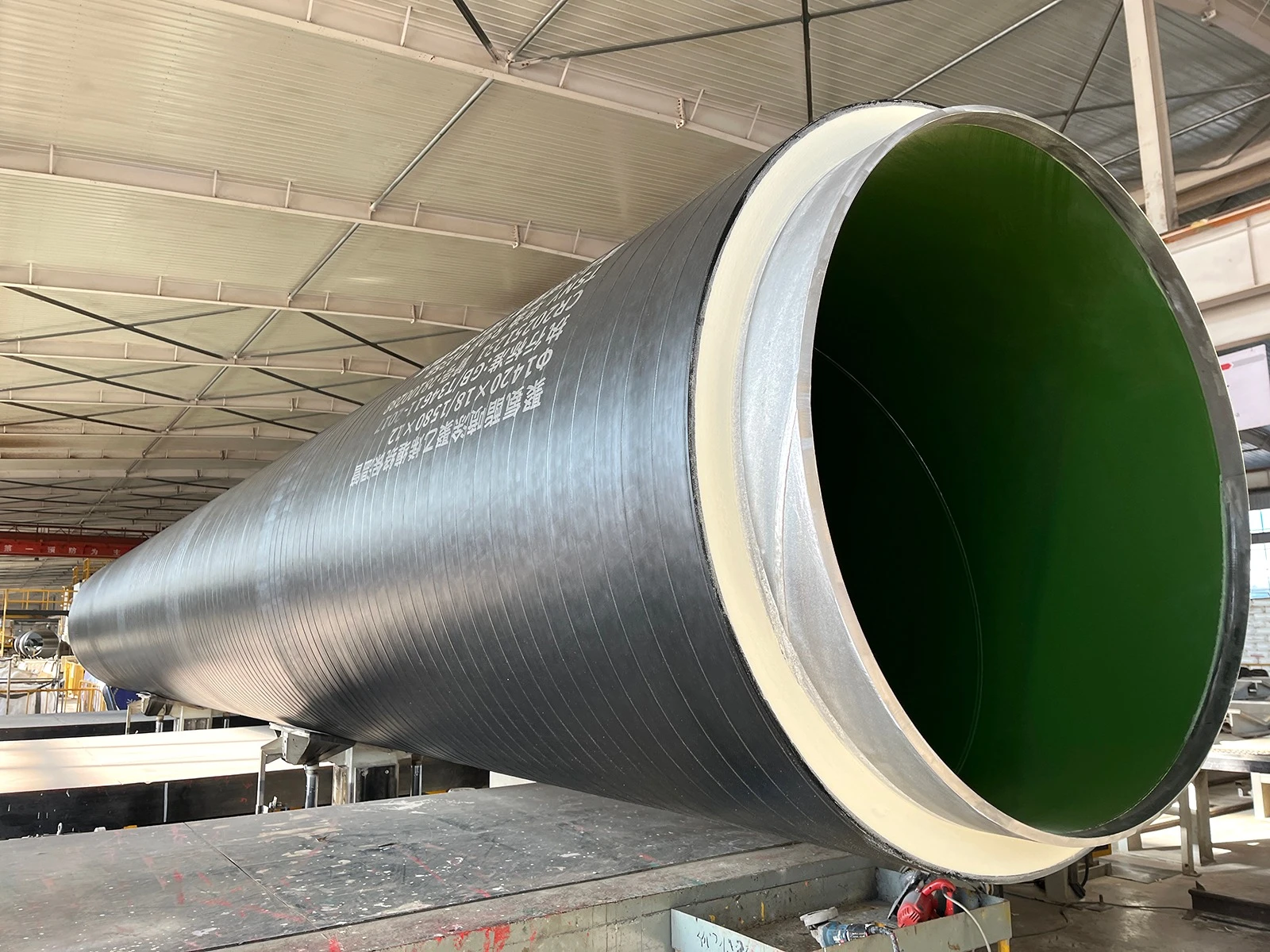
Rock wool insulation pipes are made from natural minerals such as basalt, processed by high-temperature melting and fiberization. Its thermal conductivity is approximately 0.035 to 0.045 W/(m·K), slightly higher than polyurethane, but its advantages lie in high-temperature resistance and fire resistance. The maximum operating temperature can reach 650℃, and its combustion performance rating reaches Class A (non-combustible), making it suitable for insulation of high-temperature equipment such as steam pipes, industrial boilers, heat exchangers, and flues. However, rock wool has weak water resistance; its insulation performance significantly decreases after absorbing water, requiring additional waterproofing treatment in humid environments. Furthermore, polyurethane direct-buried pipes have a thermal aging life of several decades, while rock wool pipes need to be replaced every 10 to 15 years, resulting in relatively higher operating and maintenance costs. Rock wool pipes are typically laid overhead or in trenches, requiring significant initial civil engineering investment and ongoing replacement costs.
In short, polyurethane insulated pipes are suitable for heating and cooling pipelines with temperatures not exceeding 120℃, especially for centralized heating projects with direct burial; rock wool insulated pipes are suitable for high-temperature pipelines with temperatures exceeding 120℃, such as steam pipelines and industrial high-temperature equipment, but attention needs to be paid to moisture prevention and regular replacement. The choice depends first on the medium temperature, then on the laying conditions and long-term operating costs.